
Struggling to land interviews? You're far from alone, every day my LinkedIn feed seems to be an echo chamber for struggling job seekers who share the same frustrations "I've applied for dozens of roles yet heard nothing back!". Job application after job application yet crickets. It's disheartening.
Now, in most cases, it's not that you're not good enough, to be clear, it's not you, it's likely that your job strategy needs a few careful tweaks to get you back on track. The right changes can really boost activity, response and help you gain traction.
After years in recruitment, I've seen the same mistakes appear time and time again. The good news is that most of them are entirely fixable.
In this guide, we'll look at seven common reasons your job search may have stalled—and, more importantly, what you can do to start generating more interviews.
Why Your Job Search Isn't Working (7 Recruiter Mistakes)
Quick Answer
If your job search isn't producing interviews, the problem isn't always your CV. Candidates often struggle because they're targeting the wrong roles, relying on a single application method, neglecting LinkedIn, failing to tailor applications or applying too late. Improving your overall job search strategy usually has a greater impact than continually rewriting your CV.
What's Included
You're relying on one job board
Your CV isn't selling your value
You're not following up
You're ignoring recruiters
Your applications are too generic
You're not using LinkedIn effectively
You're failing to track your progress
1. You’re Only Searching on the Big Job Boards
Not all jobs are advertised on the big job boards, look beyond Indeed, Reed, LinkedIn etc. and you will find a plethora of riches.
There is a long tail of fresh jobs on smaller and lesser known boards, search and bookmark a range of major generalist, niche and regional sources to widen your search. Search and discover niche job boards, industry specific websites and regional platforms.
➡️ Job search tip: Create a shortlist of 8–10 go-to sites across different sectors and bookmark them. Check them daily. You’ll broaden your reach instantly.
Applying to positions on smaller job sites means you'll face less competition as employers will receive fewer applications.
2. Your CV Isn’t Selling You (and is probably way too long)
Here is the harsh truth: If your CV isn’t clear, compelling, and concise, it’s probably getting skipped.
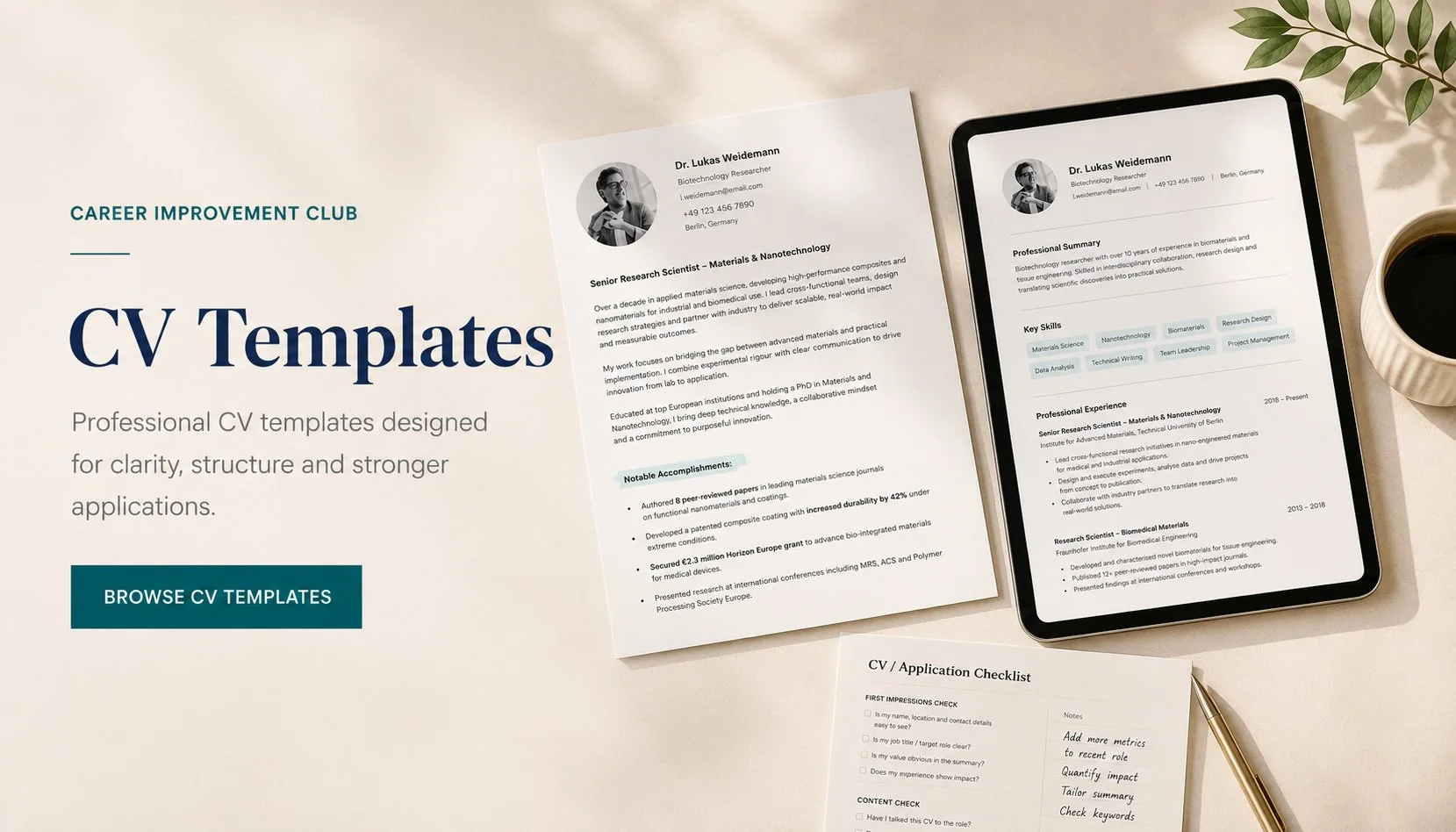
It’s time to slow down before you speed up, spend a little time reviewing your CV and enhancing, designing, upgrading it. A strong CV will provide a massive competitive edge and help you stand out in what can be a crowded market. Here’s what matters:
Length: Two pages max – no exceptions. Recruiters spend an average of 6–8 seconds on an initial scan.
Impact: Ditch the waffle. Lead with results, achievements, and skills relevant to the role.
Design: Keep it clean, modern, and easy to read. Bullet points are your best friend.
➡️ Job search tip: Treat your CV like a sales document, because that’s exactly what it is, focus on being relevant and use a strong design for a big impact.
If you’re uncertain of your key skills or what positions to apply for then consider using a career development plan template to unlock insight.
3. You're Not Following Your Job Application Up By Phone
This makes such a massive difference, I can’t tell you.
I've lost count the amount of times I've heard "I’d actually discounted that candidate but after speaking to them on the phone they sounded great!" - People Hire People - Give yourself the opportunity to show you’re a person and not just another word doc on a pile.
Why it works: Recruiters and hiring managers are busy. A follow-up call shows initiative, enthusiasm, and confidence, and can make your name stand out in a sea of applications.
➡️ Job search tip: Call within 48 hours of applying. Ask for the hiring manager by name, be polite, and reiterate your interest in the role.
4. You’re Relying Too Heavily on Recruitment Agencies
Be warned, not all recruitment agents are created equal. The industry can be a bit of a shark tank, and although some can get you access to hidden roles, they are working for the employer, not you.
Things to keep in mind: Their goal is to fill roles quickly, often at the highest possible salary (because that’s how they get paid). That means their advice might not always align with your best interests.
➡️ Job search tip: Build relationships with recruiters you trust, but don’t rely on them exclusively. Keep control of your own job search strategy and focus your attention on your own networking with employers directly.
5.) Your Job Application Is Too Generic
If you're sending out the same CV and cover letter to every job, you need to stop. It’s better to apply for 5 jobs properly than 50 jobs lazily.
"If you try to appeal to everyone you'll appeal to no one" so aim to tailor your application to each position individually. Be specific, write a compelling cover letter and use CV mirroring for terms used in job adverts. I know this takes longer, but employers will respect you for it and you will notice the increase in interviews immediately - guaranteed!
➡️ Job search tip: Write a killer cover letter that connects the dots between you and the job. Address specific questions and add a personal touch? It works.
Looking for inspiration on how to create a killer CV, one of our earlier blog posts highlights some brilliant creative CV examples…

Creative CV Examples.
6.) You’ve Got Typos (Yes, Really!)
A single typo can cost you the interview. It might sound dramatic, but attention to detail is a big deal for many employers.
I remember reading a quote from David Ogilvy (the father of advertising) who once said "If it is something important, get a colleague to read and improve it." As docs go, your CV is pretty important, so enlist the help of a friend or family member to proof read your CV, tell them the types of positions you are applying for and if they can offer up any suggestions or find any typos / grammatical errors.
➡️ Job search tip: Triple-check job titles, company names, and contact info. Use tools like Grammarly and ChatGPT and the good old-fashioned ‘read aloud’ trick. Take your time. First impressions count.
7.) You're Not Tracking Your Job Search.
Track your activity, keep tabs on your applications and interviews and stay organised, if you understand what's working (and what's not) you'll never miss an opportunity again.
Download or create a Job Search Organiser to log everything and ensure you boss your job hunt!
➡️ Job search tip: Tracking helps you spot patterns – what’s working, what’s not – and helps you stay motivated. Plus, you’ll never miss a follow-up again.
Ready to Take Control of Your Job Search?
If your current approach isn't delivering interviews, it may be time to stop relying on one document and start improving the entire process.
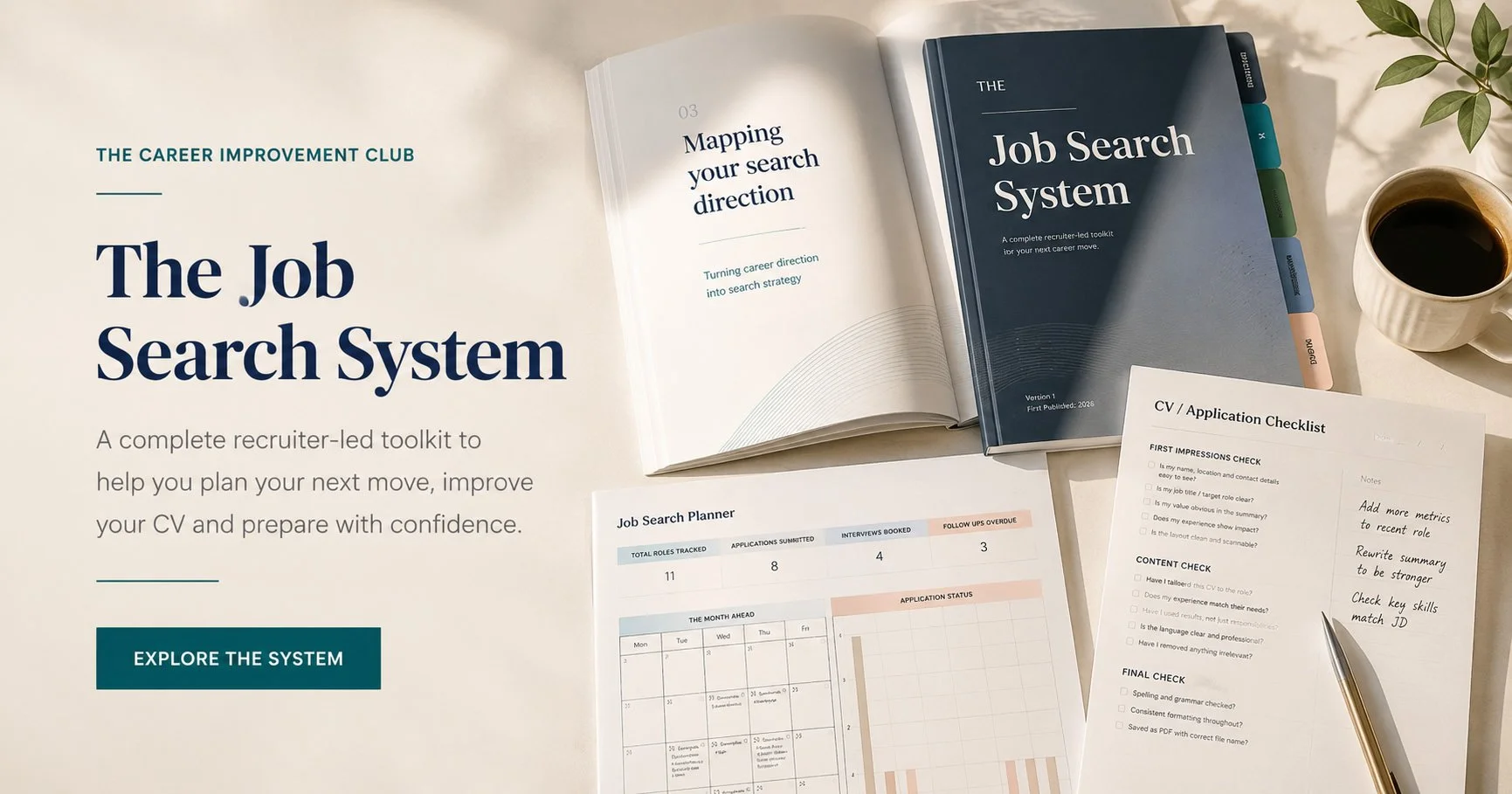
Our Job Search System brings together recruiter advice, templates, planning tools and practical frameworks to help you organise your search, improve your applications and secure more interviews with confidence.
Whether you're actively applying or preparing for your next career move, it provides a complete roadmap designed by recruiters to help you achieve better results.
FAQs
Why am I applying for jobs but not getting interviews?
Common reasons include submitting generic applications, targeting unsuitable vacancies, relying on a single job board, neglecting LinkedIn or failing to tailor your CV to each role.
How many jobs should I apply for each week?
Quality is generally more important than quantity. A smaller number of carefully tailored applications will often outperform dozens of generic submissions.
Should I tailor my CV for every application?
Yes. While you don't need to rewrite your CV from scratch each time, adapting your professional profile, skills and achievements to match the role can significantly improve your chances of being shortlisted.
Is LinkedIn really important when job searching?
Absolutely. Recruiters regularly use LinkedIn to source candidates, verify experience and research applicants before inviting them to interview.
What's the biggest mistake job seekers make?
Focusing exclusively on their CV. Your CV is important, but it's only one part of a successful job search strategy. Networking, recruiter engagement, application quality and interview preparation all play equally important roles.
Final Thoughts.
Every unsuccessful application feels personal, but it rarely tells the full story. Recruitment is influenced by timing, competition, market conditions and countless factors outside your control. Rather than becoming discouraged, focus on the parts of the process you can improve.
Remember, employers don't hire the person who submits the most applications, they hire the person who demonstrates they're the best fit for the role.
Job hunting isn’t just about luck, it’s about strategy, effort, and a little bit of smart thinking. If you’ve been grinding with no results, it’s time to rethink your approach.
Start Today: Pick one or two of the points above and fix them this week. You’ll be surprised how quickly the momentum starts to build.
Last updated: 09/07/26