Feeling stuck or unhappy at work is a completely normal part of professional life, but figuring out your next move can feel overwhelming. When you hit a wall, you usually face a major choice between needing a complete career change or simply being ready for a career upgrade.
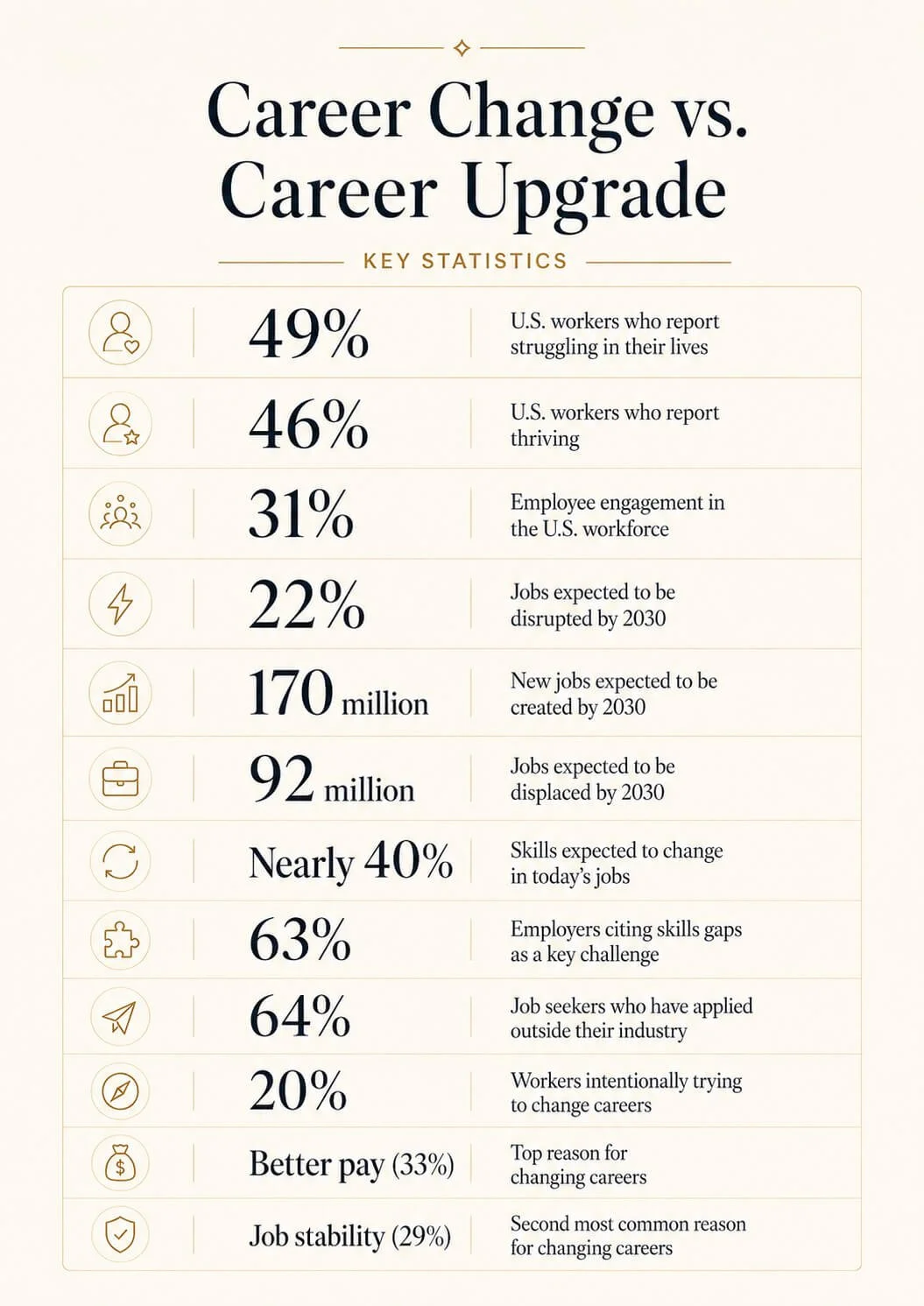
If you are currently feeling restless, you are definitely not alone. For the first time since Gallup began measuring the well-being of the U.S. workforce, more employees say they are struggling (49%) than thriving (46%).
This marks a significant shift from 2022 and 2023, when more than half of employees were considered to be thriving. Worker engagement has also fallen to its lowest level in the past decade, with just 31% of employees reporting that they feel engaged at work.
The findings suggest that many professionals are eager for change but feel unable to make a move. Concerns about salary, benefits, and the challenge of finding a comparable role remain some of the biggest barriers to switching jobs.
Because switching paths comes with real economic risks, it is more important than ever to understand exactly what you need. Let’s break down the differences between shifting industries entirely and simply leveling up your current path so you can make the right move for your future.
QUICK ANSWER
A career upgrade means improving your current career path by building new skills, gaining a qualification, moving into leadership or finding a better role in the same field. A career change means moving into a different profession or industry entirely.
You may need a career upgrade if:
You still like your industry, but feel underpaid or underchallenged
You want more responsibility, better progression or stronger skills
You feel stuck in your current role, not your whole profession
You can see a future in the same field with the right next step
You may need a career change if:
Your work no longer matches your values or interests
You feel consistently disconnected from the profession itself
A promotion or pay rise would not fix the problem
You are repeatedly drawn towards a different type of work
You are willing to invest time, money and effort into retraining
👉 If you want a structured way to work through this decision, the Career Development Plan Template helps you review your goals, identify skill gaps and create a clearer plan for your next move.
WHATS INCLUDED:
In this guide, we’ll cover:
What a career upgrade means
What a full career change means
The signs you may need to progress in your current field
The signs you may need to move into a different career entirely
The financial and emotional trade-offs to consider
How to decide which path is right for you
Key statistics on career change, skills disruption and job market shifts
Practical questions to help you make a more confident next move
What Is a Career Upgrade?
A career upgrade means growing within your current profession instead of switching to a completely different field. This could involve earning a new certification, moving into a leadership position, or developing specialized skills that open the door to better opportunities. It's often the right choice for professionals who enjoy their industry but feel ready for the next step.
The need to keep building skills is also becoming increasingly important. According to the World Economic Forum, 22% of jobs are expected to be disrupted by 2030, with 170 million new roles created and 92 million displaced.
The report notes that nearly 40% of the skills required for today's jobs are expected to change, while 63% of employers identify skills gaps as a major barrier to growth. Continuously upgrading your skills can help you stay competitive without starting your career from scratch.
ACTIONABLE TIP
Before assuming you need a full career change, ask:
Would I feel differently in a better company?
Would more responsibility make this career feel interesting again?
Am I bored because I have outgrown the role, or because I dislike the profession?
Could a qualification, mentor or promotion solve the problem?
If the answer is yes, a career upgrade may be the lower-risk move.
What is a Career Change?
A career change involves moving into a completely different profession, often requiring new skills, certifications, or even a return to school. Unlike a career upgrade, it means leaving your current industry behind to pursue work that better aligns with your interests, values, or long-term goals.
While this path may require more time, financial investment, and patience, it can be worthwhile for those who no longer find fulfillment in their current careers. According to Monster's Career Pivot Report, career changes are becoming increasingly common.
The survey found that 64% of U.S. job seekers have applied for jobs outside their industry or typical role, while 20% are intentionally trying to switch industries or career paths.
The biggest motivations are better pay (33%) and greater job stability (29%). If your current role no longer meets your personal or professional needs, a career change could offer a more rewarding future.
ACTIONABLE TIP
Create a “career overlap” list before making the move.
Write down:
Skills you already have
Industries that value those skills
Qualifications you may need
Experience gaps to close
People you could speak to in the new field
Roles that could act as a bridge between your current career and your target career
This helps make the move feel more realistic and less like starting from zero.
Signs You Need an Upgrade, Not a Change
If you generally enjoy your line of work but feel underpaid, undervalued, or stuck, an upgrade is likely your best fit. Signs include being bored with routine tasks rather than the field itself, having curiosity about leadership, or feeling like you haven't yet reached your professional ceiling.
In this position, you benefit most from pursuing additional certifications, finding a mentor, or seeking internal promotions rather than uprooting your entire career. Upgrading preserves the valuable years of experience you have already built while unlocking fresh opportunities.
This approach offers a lower-risk way to reignite your motivation, take on more responsibility, and increase your income without forcing you to start all over again.
ACTIONABLE TIP
Score your current situation across five areas:
The work itself
The employer
Your manager
Pay and progression
Long-term interest in the industry
If most of the problem sits with the employer or role, consider an upgrade first. If the problem sits with the work itself, a career change may be worth exploring.
👉 If you are considering a better role in your current field, this guide explains what skills to include in your CV, so you can present your experience more clearly.
Signs You Need a Full Career Change
If you constantly feel disconnected from your work, a promotion or pay raise may not solve the problem. A full career change is often the right choice when your job no longer aligns with your interests or long-term goals, and you're consistently drawn to a completely different profession.
While changing careers may require additional education, many programs now make the transition more accessible for working adults through flexible online learning. For example, professionals interested in healthcare can consider direct-entry MSN programs online. These programs allow individuals with a non-nursing bachelor's degree to prepare for a nursing career while earning a Master of Science in Nursing.
According to Saint Leo University, graduates of its direct entry MSN program become master's-prepared professionals equipped to improve patient outcomes. Programs like these show that changing careers doesn't always mean starting from scratch. Instead, they allow professionals to build on their existing education while preparing for a new and rewarding career.
ACTIONABLE TIP
Before changing careers, arrange three informal conversations with people in your target field.
Ask:
What does a normal week look like?
What do people misunderstand about this career?
What skills matter most?
What is difficult about the work?
What would you do differently if you were starting again?
This can prevent you from romanticising a new career before you understand it properly.
👉 If you are thinking about changing direction, this guide shares practical tips for a smoother career transition.
Weighing the Financial and Emotional Trade-Offs
Whether you choose a career upgrade or a complete career change, it's important to think beyond your next paycheck. A career upgrade is often the less risky option because it allows you to build on your existing skills, experience, and income. A career change, however, may involve additional education or a temporary reduction in earnings before leading to greater long-term satisfaction.
Looking at future job demand can also help guide your decision. According to Investopedia, healthcare and energy are expected to be among the fastest-growing industries through 2034, driven by an aging population and rising energy needs.
Data science also remains a promising field. However, the rapid growth of artificial intelligence has made its long-term outlook less predictable, and technology hiring has slowed despite significant AI investment. Before making a decision, consider your financial situation, career goals, and where you see yourself five or ten years from now.
ACTIONABLE TIP
Build a simple transition budget.
Include:
Current monthly costs
Potential training costs
Possible income drop
Emergency savings
Time needed to retrain
Time likely needed to find a new role
Minimum salary you can realistically accept
This gives you a clearer view of what kind of move is practical now.
👉 If you want to choose a path with stronger long-term prospects, this guide explains how to find a career that offers stability and growth.
How to Decide Which Path Is Right for You
Choosing between a career upgrade and a career change starts with understanding what's making you unhappy. Ask yourself whether you're frustrated with your current role or with your profession as a whole. If you still enjoy the industry but want more responsibility or better opportunities, upgrading your skills may be enough.
However, if your work no longer aligns with your interests or long-term goals, a career change may be the better option. Consider your financial situation, the time you're willing to invest in retraining, and your comfort with uncertainty before making a decision.
Seeking advice from experienced professionals can also provide a valuable perspective. Dorie Clark, bestselling author on career strategy, recommends expanding your options by reconnecting with people in your extended network, especially those working in different companies or industries. These diverse connections can offer fresh insights and open doors to new opportunities.
Career Change or Career Upgrade: A Simple Decision Test
If you are unsure which path is right, use this quick test.
Choose a career upgrade if:
You still care about the industry
You want more responsibility or better pay
You feel underused rather than completely misaligned
Your existing skills still feel valuable
You can see a realistic next step
Consider a career change if:
You feel disconnected from the work itself
You no longer want the future your current path offers
You are willing to retrain or rebuild credibility
You have researched the new field properly
The move aligns with your values, strengths and lifestyle
The aim is not to make the biggest move. The aim is to make the right move.
Frequently Asked Questions
How do I know if I need a career change or just a career upgrade?
The answer depends on what's causing your dissatisfaction. If you still enjoy your industry but feel limited by your current role, salary, or growth opportunities, a career upgrade may be the better choice. However, if your work no longer aligns with your interests, values, or long-term goals, a career change may offer greater fulfillment. Taking time to reflect on your motivations and speaking with mentors or professionals in your desired field can help you make a more informed decision.
Is it possible to change careers without starting from scratch?
Yes. Many career transition pathways are designed for professionals who already have work experience or a bachelor's degree in another field. For example, accelerated programs, industry certifications, and flexible online degrees can help you gain the qualifications needed for a new profession. This allows many people to transition into a new career without beginning at an entry-level position.
What should I consider before changing careers?
Before making a career change, evaluate your financial situation, the time and cost of retraining, future job demand, and your long-term career goals. It's also helpful to research your target industry, connect with professionals, and identify whether your dissatisfaction stems from your current role or your profession as a whole. Careful planning can help you make a smoother and more successful transition.
Career Change vs. Career Upgrade: Key Statistics
There is no one-size-fits-all answer when it comes to choosing between a career upgrade and a career change. The right decision depends on your goals, interests, financial situation, and what is truly driving your dissatisfaction. If you still enjoy your industry, building new skills or pursuing leadership opportunities may be enough to reignite your career.
However, if your work no longer aligns with your values or aspirations, exploring a new profession may lead to greater long-term fulfillment. Take time to evaluate your options, seek advice from trusted mentors, and choose the path that best supports the future you want to build.
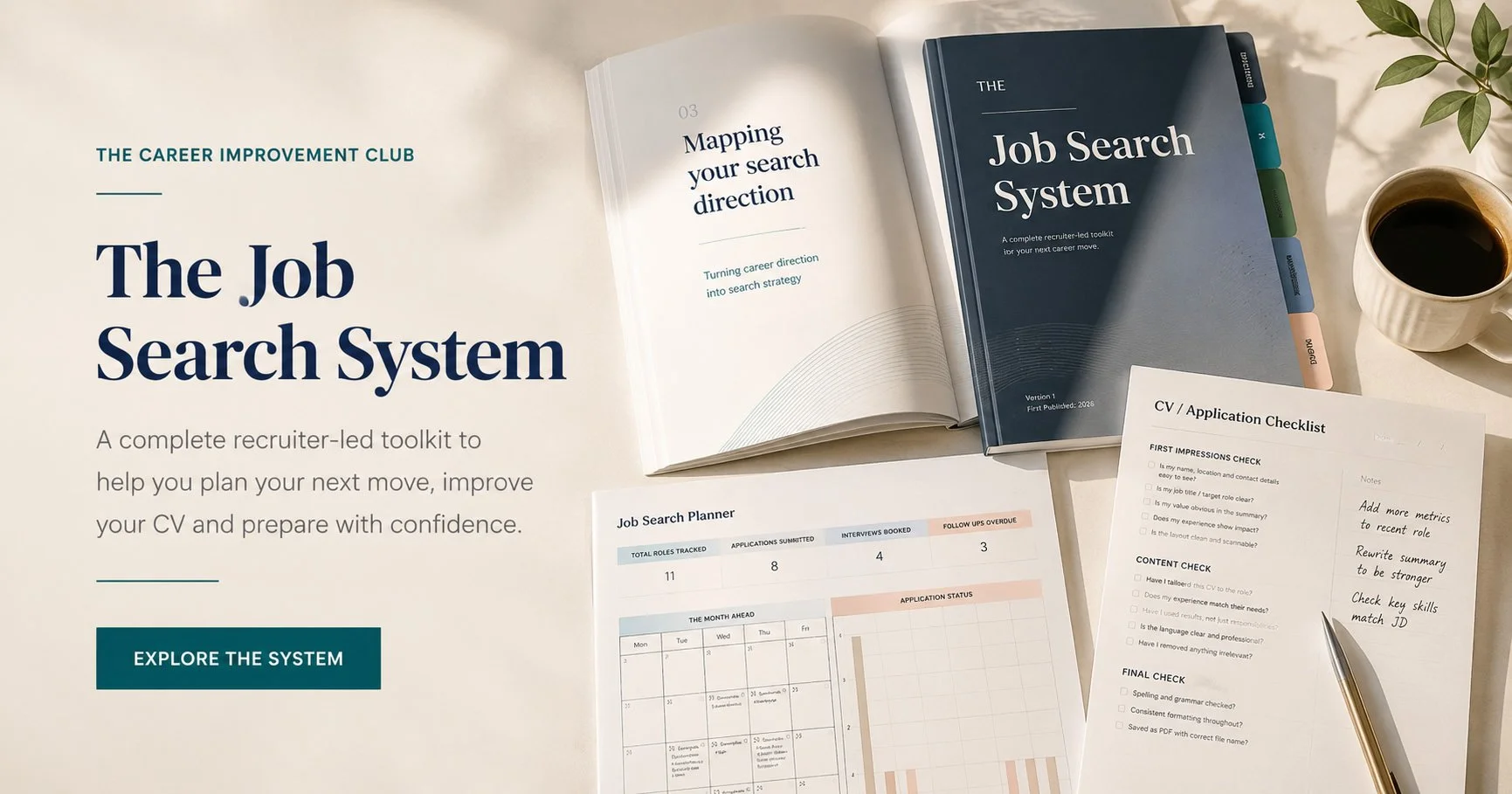
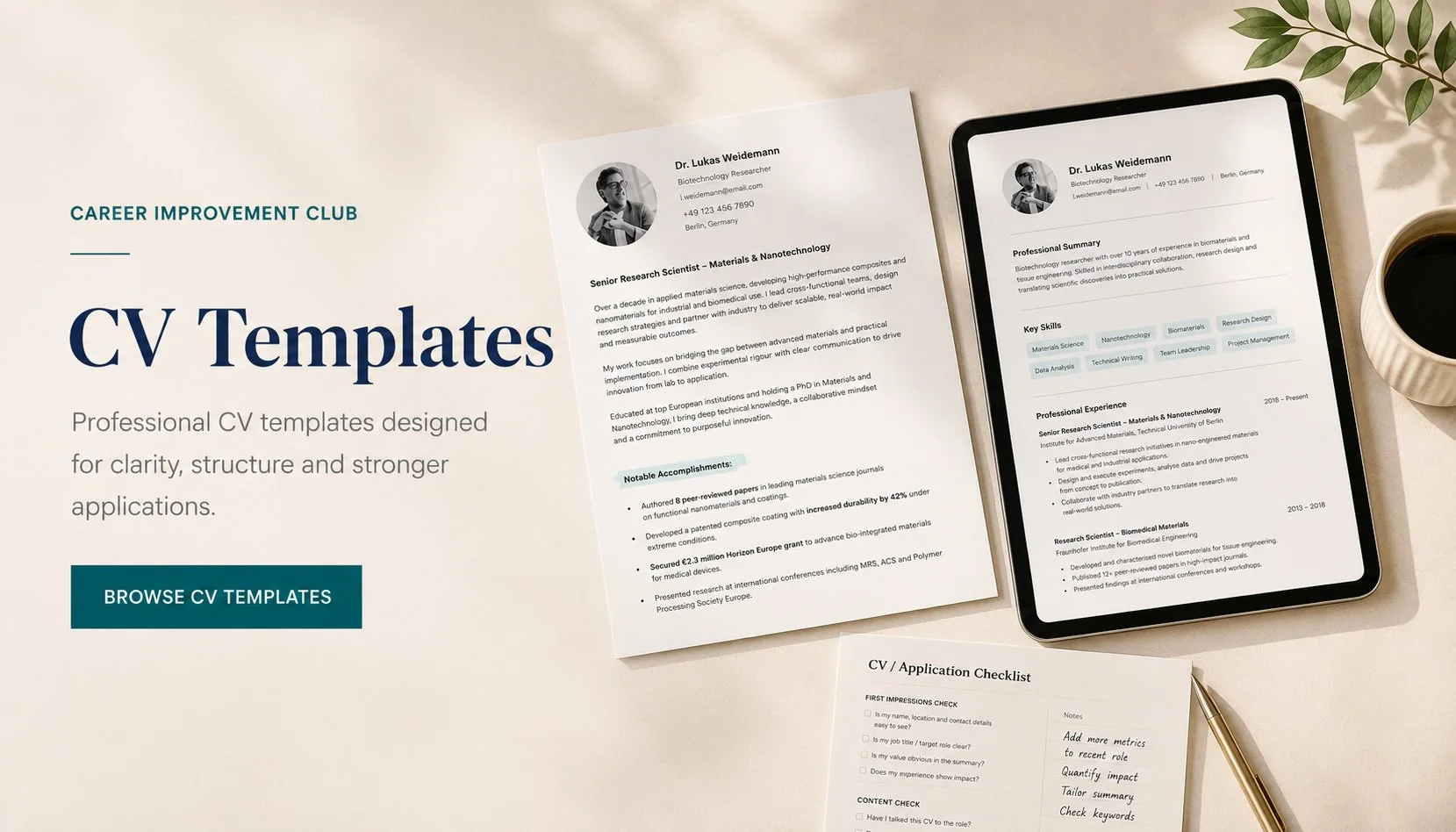
👉 If you are ready to update your applications for your next move, browse our CV templates and job search tools to create a clearer, more focused application.