
Most people assume their CV is the problem. When applications don't lead to interviews, the first instinct is usually to rewrite the CV, buy a new template or tweak a few bullet points.
In some cases this is exactly what's needed. But after spending years in recruitment, I've seen the opposite far more often. Candidates with excellent CVs who still struggle to find work because the CV isn't actually the problem. It's the job search strategy sitting behind it.
A great CV is only one part of a successful job search. If the rest of your approach isn't working, improving your CV alone is unlikely to change the outcome.
QUICK ANSWER
If you're applying for dozens of jobs without receiving interviews, the issue is rarely your CV alone.
Successful job searches combine several elements including targeting the right vacancies, networking, tailoring applications, interview preparation, recruiter engagement and consistent follow-up.
A CV opens the door. Your overall job search system determines how many doors you get to knock on.
WHAT’S INCLUDED
Why your CV isn't always the problem
What recruiters actually evaluate during a job search
The hidden reasons good candidates don't get interviews
Why applying for more jobs often makes things worse
The seven pillars of a successful job search system
How to diagnose where your own job search is breaking down
Building a repeatable system that generates interviews
Common myths about modern job searching
Frequently asked questions
Why Your CV Isn’t Always the Problem
One of the biggest misconceptions in modern job searching is that every setback can be solved by rewriting your CV. It's understandable why people reach that conclusion. The CV is the document employers ask for, so when applications don't generate interviews, it feels logical to assume the document itself must be failing.
In reality, recruiters rarely evaluate a CV in isolation. Every application is judged within a much wider context that includes the quality of the role you've chosen, how closely your experience matches the vacancy, the strength of competing applicants, the timing of your application, your LinkedIn profile and, increasingly, the consistency of your personal brand across multiple channels.
Through my resume review and writing services I’ve seen thousands of CVs during my recruitment career, and while some genuinely required improvement, many were already perfectly capable of securing interviews. The candidates weren't struggling because they had poor CVs; they were struggling because the rest of their job search process wasn't supporting the CV.
Think of your CV as the brochure for a business. A beautifully designed brochure cannot compensate for poor marketing, weak targeting or a lack of customer engagement. The same principle applies to recruitment. Your CV introduces you, but it is your overall strategy that determines whether employers ever have the opportunity to read it.
This is why continually rewriting a reasonably good CV often produces diminishing returns. Once you've reached a professional standard, the biggest improvements usually come from refining everything that happens before and after the employer opens the document.
What Recruiters Actually Evaluate
Many candidates assume recruitment is simply a case of comparing CVs and selecting the person with the strongest experience. The reality is considerably more complex.
Recruiters are trying to solve a business problem. They need to identify someone who possesses the right skills, fits within the organisation, can perform the role successfully and represents a low recruitment risk. Your CV helps answer some of those questions, but not all of them.
Recruiters also consider whether you've applied for an appropriate position, whether your career progression makes sense, whether your LinkedIn profile supports your application and whether your experience aligns with the specific requirements of the role. Even the timing of your application can influence whether your CV receives attention, particularly when hundreds of candidates apply within the first few days.
This wider assessment explains why two candidates with almost identical CVs can receive very different outcomes. One has positioned themselves effectively throughout their entire job search, while the other has relied solely on the strength of their CV.
The Hidden Reasons Good Candidates Don't Get Interviews
It's easy to assume that unsuccessful applications mean you aren't qualified enough. In many cases, that simply isn't true.
Strong candidates regularly miss opportunities because they're making strategic mistakes rather than capability mistakes.
One of the most common issues is applying too broadly. Rather than targeting positions where they genuinely offer strong value, candidates submit large numbers of generic applications across multiple industries and job titles. While this feels productive, it often reduces the quality of every application.
Another frequent issue is failing to tailor applications. Recruiters can usually identify generic CVs within seconds. Small changes to your professional profile, achievements and key skills often make a significant difference because they demonstrate relevance rather than simply listing experience.
Timing also plays a larger role than many candidates appreciate. Popular vacancies frequently receive hundreds of applications, with recruiters beginning their reviews long before the advertised closing date. Delaying an application by several days can significantly reduce visibility, regardless of how strong the CV might be.
Finally, many candidates neglect networking altogether. Recommendations, referrals and recruiter relationships continue to play an important role in recruitment, yet they remain one of the least utilised aspects of most job searches.
None of these issues relate directly to the quality of a CV, yet each has a substantial impact on interview success.
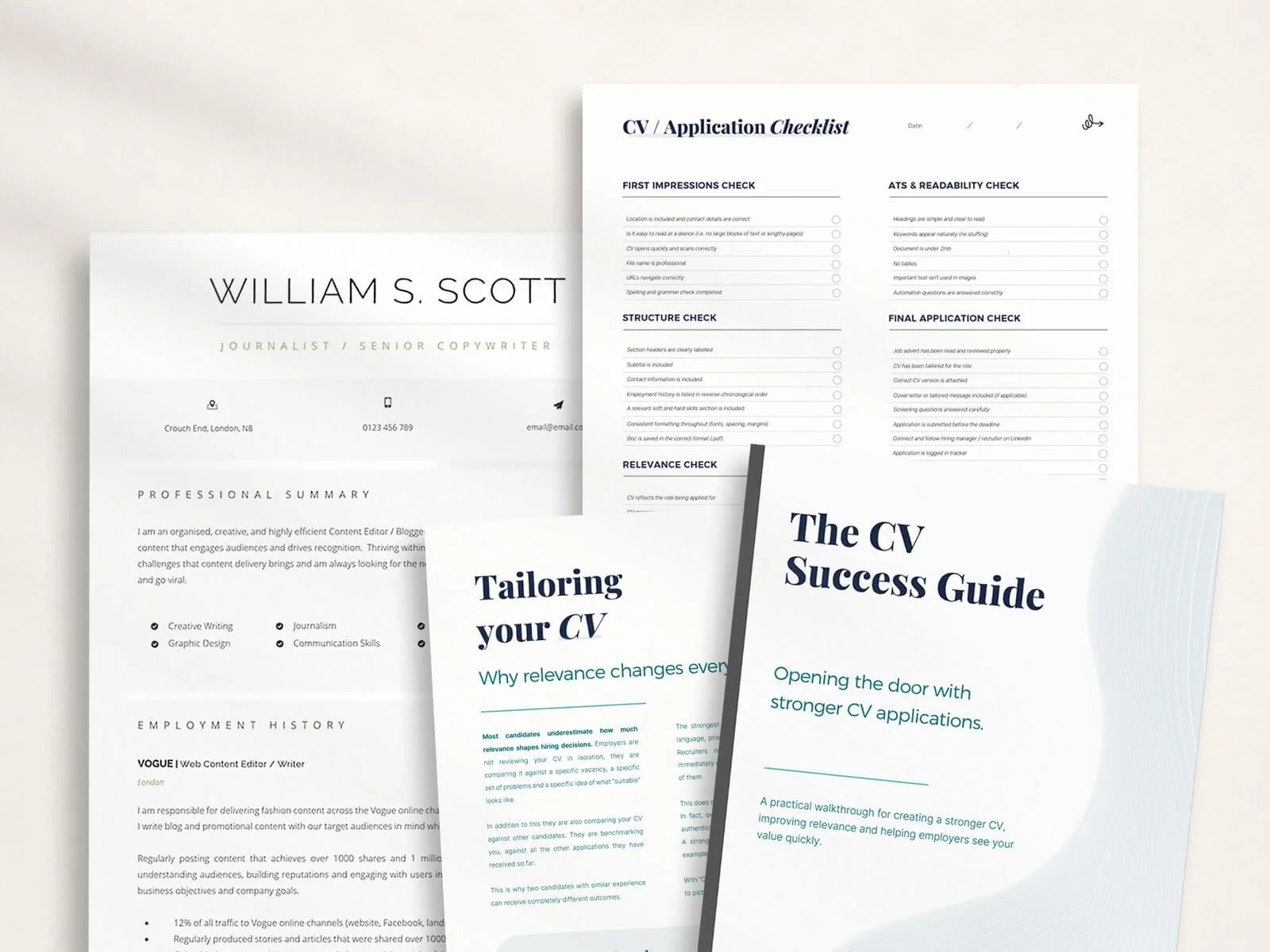
A good CV is only half the story.
Why Applying for More Jobs Usually Isn't the Answer
When job searching becomes frustrating, the natural reaction is often to increase the number of applications being submitted.
Instead of applying for ten suitable vacancies each week, candidates begin applying for thirty or forty. Their logic is understandable: more applications should create more opportunities.
Unfortunately, recruitment rarely works that way.
Increasing volume usually means reducing quality. Applications become less tailored, cover letters become generic and less time is spent researching employers or preparing for interviews. Eventually the job search becomes an exercise in quantity rather than effectiveness.
Successful candidates focus on conversion rates rather than application numbers. They ask questions such as:
How many applications generated interviews?
Which industries produced the strongest response?
Which CV version performed best?
Which recruiters replied most frequently?
This approach transforms job searching from guesswork into a measurable process of continuous improvement.
The Seven Pillars of a Successful Job Search
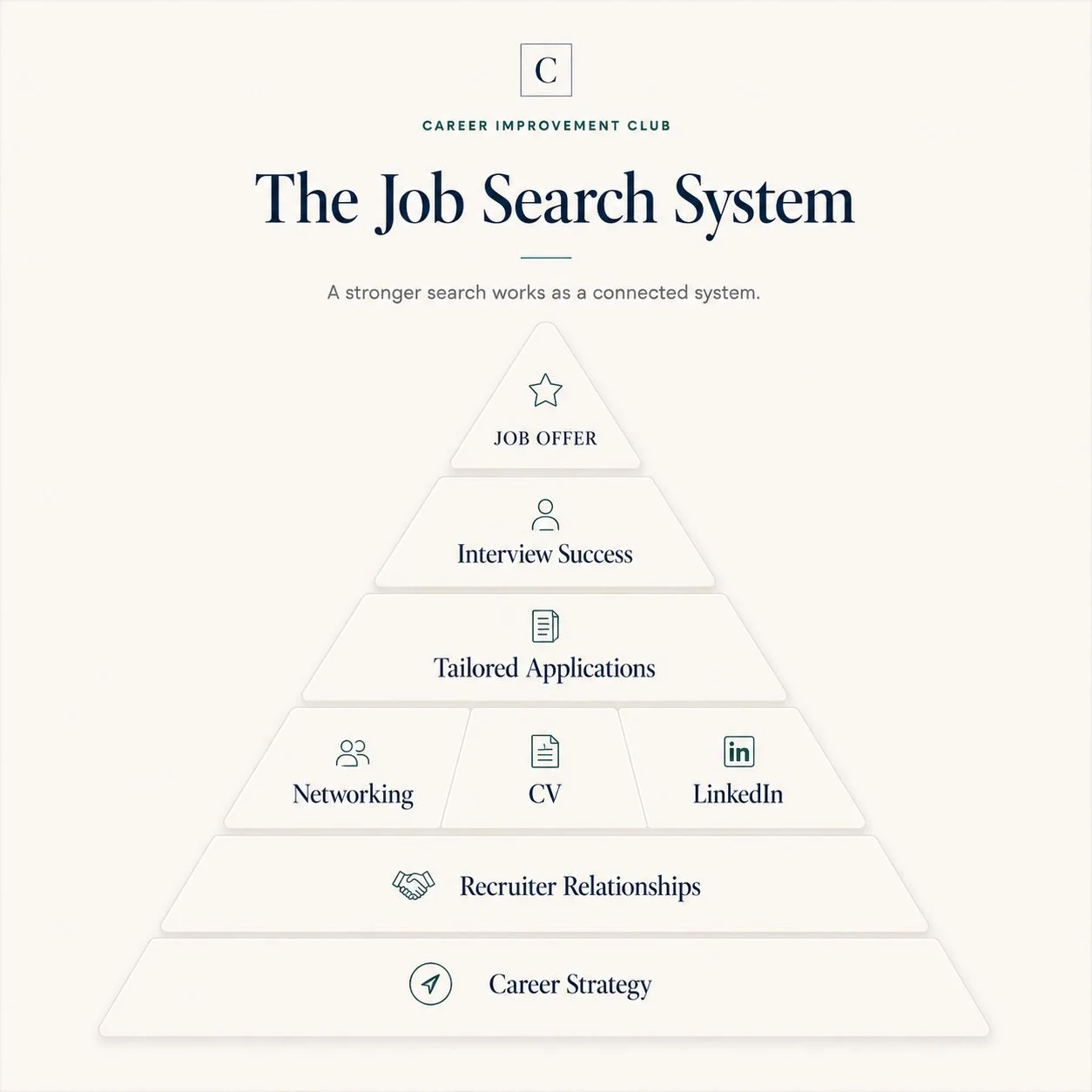
Rather than treating your CV as the centre of your job search, it's more useful to think of recruitment as a complete system made up of several interconnected parts.
1. CAREER DIRECTION
Every successful job search begins with clarity. Before updating your CV or applying for vacancies, you should understand exactly what role you're targeting, which industries interest you, the salary you're aiming for and the type of organisation you want to join. Clear direction makes every later decision easier.
2. PERSONAL BRAND
Your CV should support your LinkedIn profile, cover letters, portfolio and interview performance. Together they create a consistent professional identity that reassures employers they're evaluating the same candidate throughout the recruitment process.
3. JOB SEARCH STRATEGY
Successful candidates rarely rely on a single source of vacancies. Instead, they combine job boards, company websites, LinkedIn, recruitment agencies, networking and referrals to create multiple routes into organisations.
4. TAILORED APPLICATIONS
Every application should demonstrate why you're an excellent fit for that particular position. This doesn't require rewriting your CV from scratch each time, but it does require thoughtful adjustments that reflect the employer's priorities.
5. INTERVIEW PREPARATION
Receiving an interview is only half the challenge. Candidates who consistently secure offers prepare well before invitations arrive by researching employers, developing achievement stories and practising difficult interview questions. A PowerPoint job interview presentation is also a great way to present yourself in a professional and stand-out way.
6. PROFESSIONAL FOLLOW-UP
Simple follow-up emails, recruiter updates and maintaining professional relationships help candidates remain visible throughout lengthy recruitment processes. Many applicants overlook this entirely.
7. CONTINUOUS IMPROVEMENT
Perhaps the biggest difference between successful and unsuccessful job seekers is their willingness to evaluate results objectively. Rather than repeatedly making the same mistakes, they review what is working, identify weak points and continuously improve their approach.
How to Diagnose Your Own Job Search
Before rewriting your CV again, it's worth taking a step back and assessing your entire process.
Ask yourself whether you're targeting appropriate roles or simply applying to anything available. Consider whether your LinkedIn profile presents the same professional image as your CV. Reflect on how much time you spend networking compared with submitting applications. Review whether you've developed relationships with specialist recruiters or whether you're relying exclusively on online job boards.
Most importantly, measure your results honestly. If your applications generate interviews but not job offers, your interview skills probably require attention rather than your CV. If you're receiving recruiter calls but very few interviews, your targeting may need refining. If nobody responds at all, then your CV, application strategy or chosen vacancies deserve closer examination.
Viewing your job search as a complete system makes it much easier to identify where improvements will have the greatest impact.
Build a Job Search System, Not Just a Better CV
The most successful candidates don't spend months endlessly rewriting their CV.
They build repeatable systems that consistently generate opportunities.
That system includes understanding their target market, developing a strong professional brand, building relationships with recruiters, tailoring applications, preparing thoroughly for interviews and continuously reviewing their results.
The CV remains an important part of that process, but it should never carry the entire weight of your job search.
When every stage of your strategy works together, finding opportunities becomes significantly more predictable. Instead of hoping each application succeeds, you create a process that continually improves over time.
Ultimately, that's what separates candidates who occasionally secure interviews from those who consistently receive them.
Frequently Asked Questions
Is a better CV enough to get a job?
No. A strong CV is essential, but employers also evaluate your experience, professional brand, application quality, interview performance and how well you fit the specific role.
Why am I applying for jobs but not getting interviews?
The most common reasons include targeting unsuitable vacancies, submitting generic applications, applying too late, failing to optimise your LinkedIn profile or relying solely on online job boards rather than building a broader job search strategy.
How many jobs should I apply for each week?
There is no ideal number. It's generally more effective to submit fewer, higher-quality applications that have been tailored to the role than large numbers of generic applications.
What is a job search system?
A job search system is a structured approach that combines career planning, CV writing, networking, LinkedIn optimisation, recruiter engagement, interview preparation and application tracking into one repeatable process.
Should I keep rewriting my CV?
Only if your CV genuinely needs improving. Once it reaches a professional standard, greater improvements usually come from refining the wider job search process rather than continually editing the document.
Final Thoughts
A great CV opens doors.
A great job search strategy creates them.
If you've reached the point where your CV is polished but interviews still aren't arriving, it may be time to stop focusing exclusively on one document and start improving the system that surrounds it.
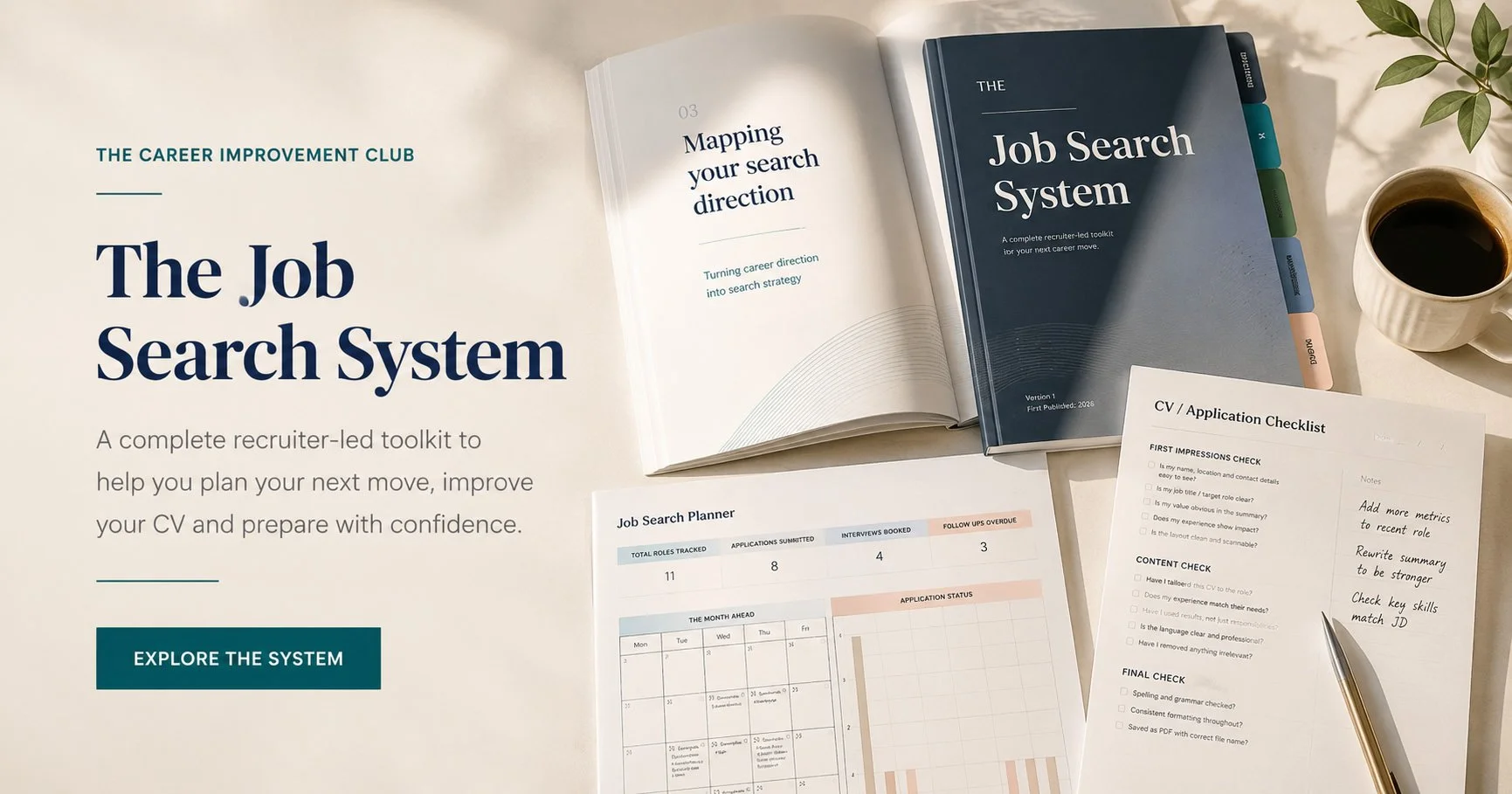
That's exactly why we created The Job Search System. Rather than concentrating solely on CV writing, it provides a complete recruiter-led framework covering every stage of the modern job search. From planning your career move through to interview preparation and offer negotiation, it helps you build a process that delivers consistent results rather than relying on trial and error.
Your CV is an important tool, but it should never have to do all the heavy lifting.