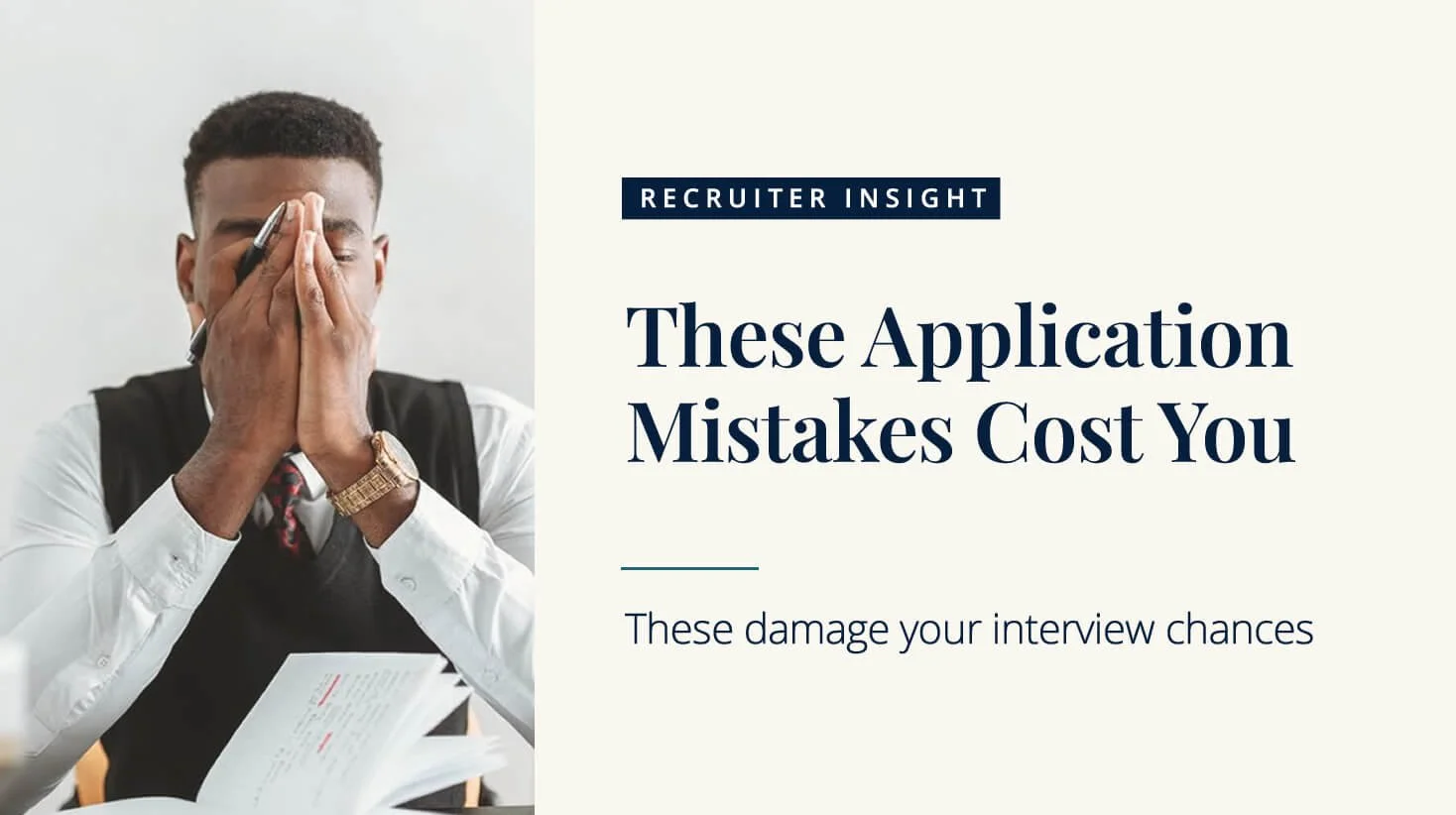
You’ve checked the job description. You’ve spent hours working on your CV. You’re a perfect match for the role, and an interview seems inevitable. Yet you never hear back from the recruiter. Just silence. Sound familiar?
In the age of AI, application rates are going through the roof, and it’s harder than ever to differentiate yourself from the pack. This can mean even the smallest details can make or break your CV. You could be making small application mistakes that you’re not even aware of, that could be damaging your chances of standing out from a crowded pack of well-qualified candidates. In this article, we’ll discuss what those mistakes actually look like, why they might matter more than you think, and how to fix them before your next application.
QUICK ANSWER
Small application mistakes can quietly damage your interview chances, even when you are qualified for the role. Recruiters often review CVs quickly, so vague summaries, weak achievements, poor formatting and unedited AI content can make a strong candidate look less relevant or less professional.
To improve your chances of getting interviews:
Make your CV easy to scan within seconds
Add a clear headline that shows your target role or value
Replace generic summaries with specific, relevant positioning
Use measurable achievements wherever possible
Keep formatting clean, consistent and simple
Edit AI-generated content so it sounds personal and credible
Tailor each CV to the job description before applying
Check whether every bullet point proves value, not just responsibility
WHATS INCLUDED:
In this guide, we’ll cover:
Why first impressions matter when recruiters scan your CV
How generic summaries weaken your application
Why vague achievements fail to prove your value
How poor formatting can damage credibility
Why unedited AI content stands out to recruiters
Simple fixes that can improve your interview chances
First Impressions Matter
Recruiters and hiring managers regularly receive hundreds of applications per vacancy, so it can be tricky to stand out. According to Jobseeker’s hiring trends and statistics, HR professionals spend an average of 30 seconds reviewing each CV before evaluating whether it’s worth considering the candidate.
That initial scan of your CV is critical to your chances of success. In those 30 seconds, a recruiter forms an impression of your resume's quality, relevance, and professionalism. And once formed, that impression is almost impossible to reverse. So make sure the details you want to convey to the hiring manager are the ones that stand out in your resume.
Pro tip: Add an engaging headline to your CV header. Even before the recruiter finishes reading your personal details, this will give them a good impression of who you are and what you offer.
ACTIONABLE TIP
Before sending your CV, give yourself 10 seconds to scan the top section, ask:
Can I tell what type of role this person is targeting?
Can I see their most relevant strengths quickly?
Does the CV match the job advert?
Would I keep reading?
If the answer is no, the top section needs tightening.
Generic Summaries Fail to Impress
Your resume summary is the first section of your application that the recruiter will read in detail. It’s up to you to make it count. However, because you’re trying to compress your credentials into a concise paragraph, this can be one of the sections that’s most susceptible to slipping into meaningless clichés.
Phrases like “results-driven professional with a passion for excellence” or “dynamic team player with strong communication skills” lack impact after a recruiter reads them for the 500th time. Instead, your summary needs to be highly personal and unique to your skills and experience. Aim to produce three sentences maximum, directly tailored to the job description, and anchored with at least one specific credential or achievement.
Pro tip: More than any other section, the resume summary is the part of your application that benefits from intense redrafting. Don’t expect to nail it in one go, but work on honing and refining your summary, word-by-word, application-by-application, until it truly reflects your unique selling points.
ADDITIONAL INSIGHT:
A strong CV summary should not describe the type of person you want to be. It should summarise the evidence that makes you suitable for the role.
Generic phrases such as “hard-working”, “motivated” or “results-driven” are not wrong, but they do not prove anything on their own. A stronger summary gives the recruiter a quick reason to believe you are relevant.
Example:
Weak:
Results-driven professional with excellent communication skills and a passion for delivering success.
Stronger:
Customer service team leader with five years’ experience improving response times, coaching junior staff and handling escalated complaints in fast-paced retail environments.
Vague Achievements Don’t Prove Anything
If you can’t quantify your achievements, they may as well not exist to the recruiter or hiring manager. Vague explanations of your achievement or impact, like “improved customer satisfaction,” “increased sales,” or “managed a team,” are not going to move the needle for your application. Every candidate claims to have made an impact in their previous roles, but you’re going to need to prove it if you want success.
Recruiters will be on the lookout for evidence to support your claims. A bullet point that reads “Increased regional sales revenue by 34% in 12 months, exceeding annual quota by £420K” tells a hiring manager something you actually did, while “increased sales” leaves more questions than answers.
Pro tip: Go through each bullet point in your work experience section and ask a single question: does this prove something, or does it just claim something? If it's the latter, add a number, a timeframe, or a specific outcome. If you can't do so, you might be better off without it.
ACTIONABLE TIP
Use this simple formula for stronger bullet points:
Action + context + result
For example:
Improved onboarding process for new starters, reducing repeated queries and helping new team members become productive faster.
Or, where you have numbers:
Increased regional sales revenue by 34% over 12 months, exceeding annual target by £420K.
Even when you do not have exact figures, you can still be specific about the outcome.
👉 If you are considering a better role in your current field, this guide explains what skills to include in your CV, so you can present your experience more clearly.
Formatting That Confuses
Formatting mistakes are particularly damaging because they create an impression of carelessness before a word of content has been assessed. In Jobseeker’s research, 99% of HR professionals say they value clean, consistent formatting throughout a resume.
Inconsistent font sizes, misaligned bullet points, and irregular spacing can easily give your resume an unprofessional look and feel. None of these seem significant in isolation. But put them all together, and they suggest you didn’t check your work thoroughly. This raises questions about your attention to detail, and your commitment to the application itself.
Pro tip: Keep it simple, sticking to one professional font throughout, consistent spacing between sections, and margins that give the document room to breathe. A clean, well-formatted resume communicates professionalism before a recruiter has read a single word.
ACTIONABLE TIP
Before applying check:
Are headings consistent?
Is spacing even?
Are bullet points aligned?
Is the font readable?
Are margins balanced?
Can the CV be understood without graphics, icons or text boxes?
If the answer is yes, the formatting is doing its job.
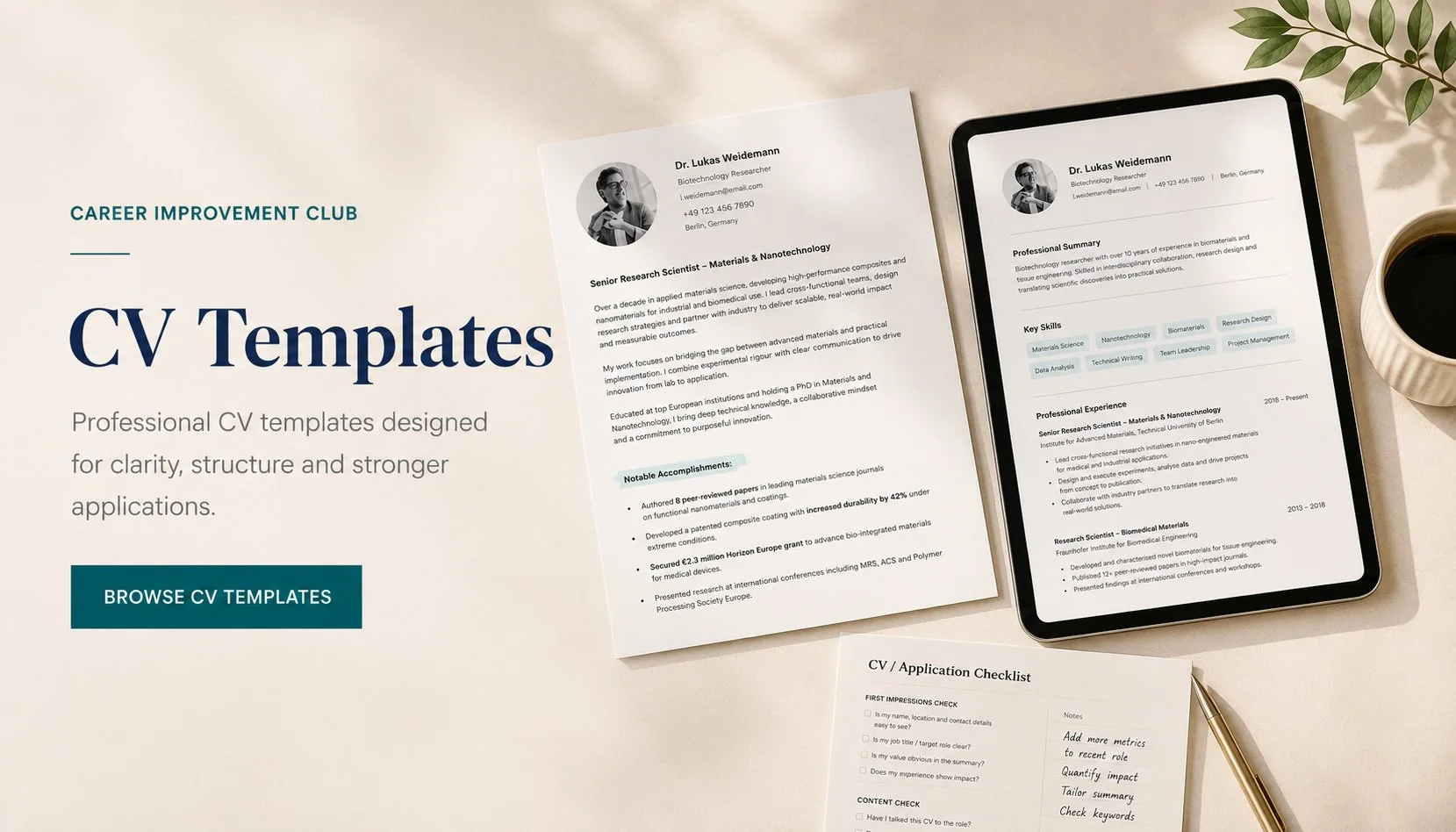
👉 If you are unsure whether your CV layout is helping or hurting your applications, this guide explains whether you should use a CV template.
Unedited AI Content Stands Out
AI-powered resume builders can enhance your application, but relying wholesale on AI-generated content is going to get you caught out. Jobseeker’s research shows 61% detect AI through a lack of personalization in job applications, while 54% are less likely to proceed with an application if they detect unedited AI content.
Recruiters and hiring managers are getting used to spotting generic AI resume slop. Telltale signs include sentences that are technically correct but oddly generic, achievement statements that don't quite match the candidate's stated role, and a professional profile that reads fluently but says very little of substance.
Pro tip: Use AI to improve your final resume, but never as its foundation. AI tools can help you make your resume a closer match to the job description, improve your use of technical, industry keywords and phrases, and check for basic errors, but always start with your own work and build from there.
AI can be useful, but it should support your thinking rather than replace it. The strongest applications still need your own examples, judgement and career story.
Recruiters are not necessarily rejecting candidates because they used AI. The problem is when the application sounds generic, exaggerated or disconnected from the candidate’s real experience.
ACTIONABLE TIP
After using AI, edit your CV by asking:
Does this sound like me?
Is every claim true?
Have I added real examples?
Does the wording match my actual experience?
Would I be comfortable explaining this in an interview?
If you cannot confidently talk about a point, it should not be in your CV.
👉 If you want to use AI without sounding generic, this guide explains how to use AI to improve your job search.
Small Fixes, Big Impact
None of these mistakes are difficult to fix. Taking the time to carefully review the job description and tailor your application to meet the requirements of the role can help eliminate most of these small application mistakes, increasing your chances of progressing to the interview stage. The candidates who consistently reach the latter stages of the recruitment process aren't necessarily the most experienced or impressively qualified. They're the ones who've done the small things right, and made it easy for a recruiter to say yes.
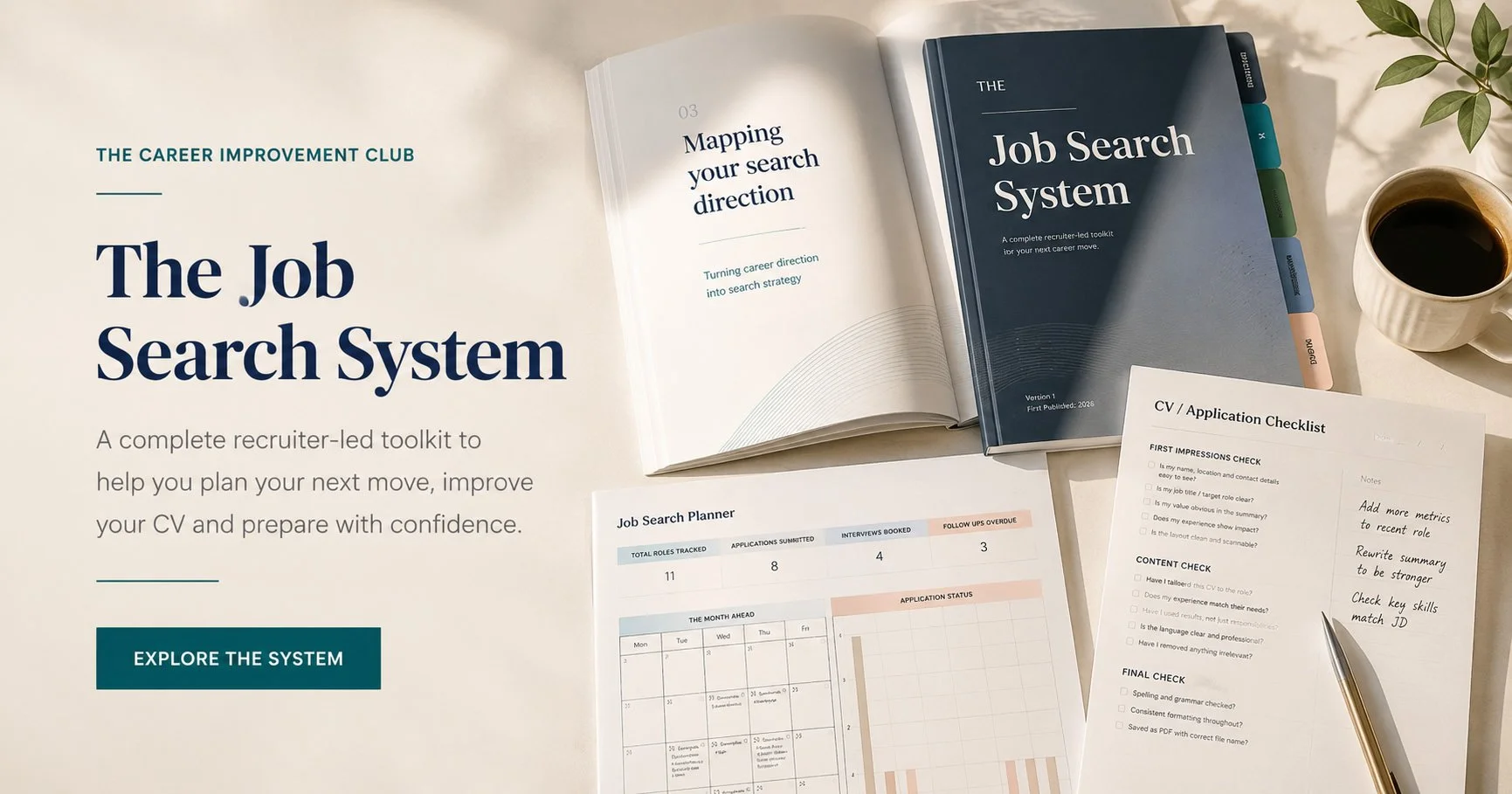
👉 If you are ready to update your applications for your next move, browse our CV templates and job search tools to create a clearer, more focused application.