
Technology, automation, and changing economic conditions are transforming workplaces across industries. Outdated skills no longer guarantee professional security in today's highly competitive job market. As a result, employers increasingly value professionals who can adapt quickly, learn continuously, and contribute to innovation and organizational growth.
Future-proofing your career is not about forecasting every market shift. This approach builds the essential knowledge, skills, and adaptability required to maintain professional value over time. Committing to continuous learning and emerging opportunities directly drives long-term career growth.
In this article, we’ll explore six practical ways to strengthen your career resilience and thrive in an ever-changing job market.
QUICK ANSWER
To future-proof your career, focus on building skills that stay valuable even as roles, tools and industries change. Technical knowledge matters, but long-term career security increasingly depends on adaptability, continuous learning, communication, critical thinking and strong professional networks.
To strengthen your career resilience:
Identify which skills are changing in your industry
Build transferable skills that work across multiple roles
Keep learning through short courses, projects and practical experience
Develop soft skills such as communication, judgement and adaptability
Use AI tools to understand skills gaps and improve your applications
Build your network before you need it
Look beyond advertised roles and explore hidden opportunities
👉 If you want a simple way to check whether your CV is doing this properly, this guide explains what skills to include in your CV.
1. Commit to Continuous Learning
Professionals who continually update their knowledge can adapt more effectively to new technologies, changing responsibilities, and emerging career opportunities. This can include earning certifications, attending workshops, taking online courses, or developing new technical and soft skills. Learning should be viewed as an ongoing investment rather than a one-time achievement.
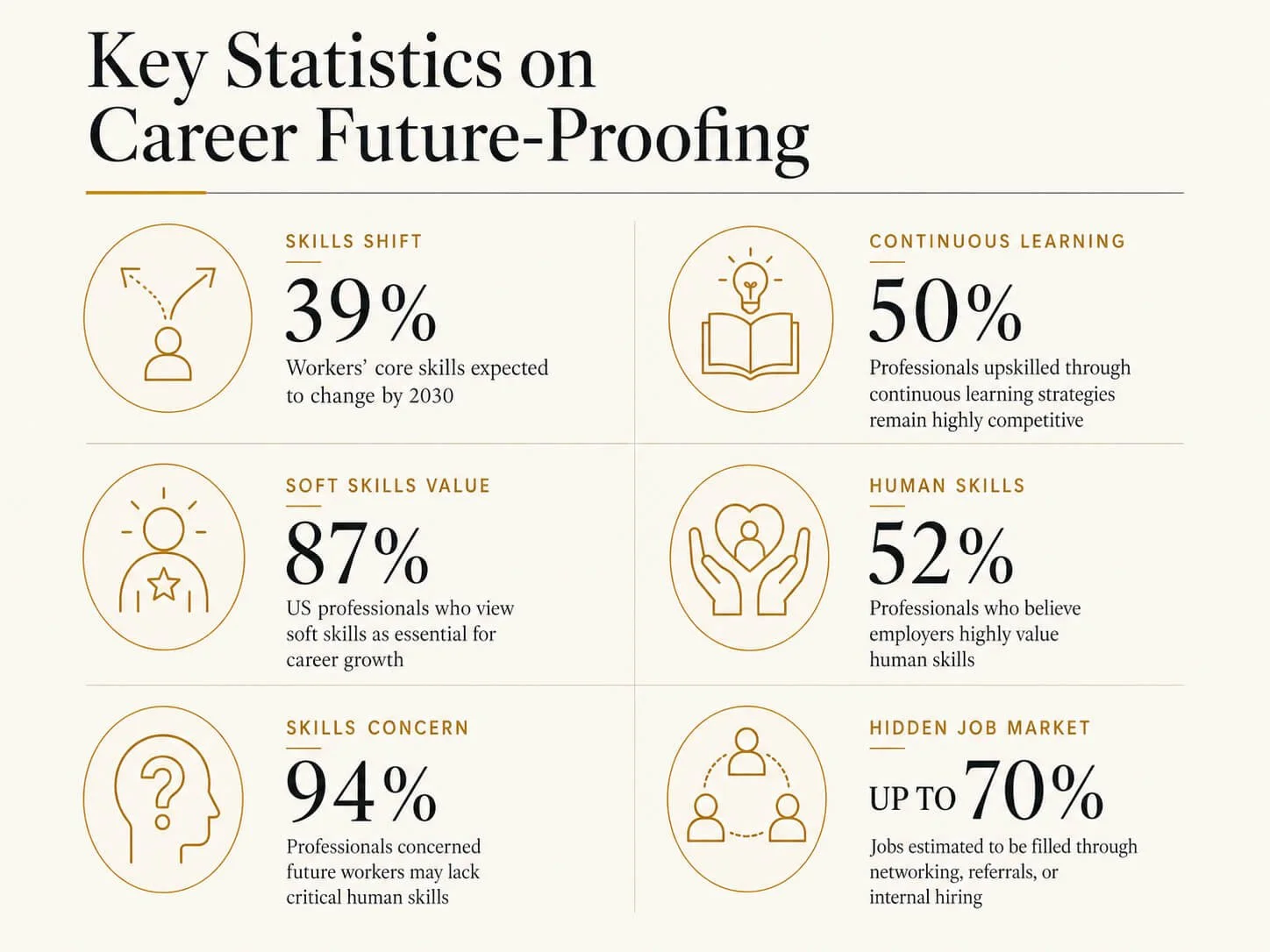
According to the World Economic Forum, employers anticipate that 39% of workers’ core skills will change by 2030. As job requirements evolve, continuous learning is becoming increasingly important. Reflecting this trend, 50% of workers have already completed training as part of long-term learning and career development strategies.
ACTIONABLE TIP
Create a simple 90-day learning plan.
Choose:
One technical skill to improve
One human skill to strengthen
One industry trend to understand better
This keeps learning manageable and gives you a clear reason for each course, book, podcast or project you choose.
2. Invest in Career-Focused Education
To future-proof your career, choose an education that supports your long-term goals and matches industry needs. Focus on credentials, certifications, or degrees that employers actively value. Strategic learning investments can help you build relevant skills, improve career prospects, and stay competitive in a changing job market.
Consider the example of working healthcare professionals. Healthcare professionals often need additional qualifications to advance their careers. However, demanding schedules and patient care responsibilities can limit opportunities for traditional classroom-based learning.
Many healthcare professionals pursue online education while managing demanding work schedules. These programs help balance learning with professional responsibilities. For example, online FNP programs enable registered nurses to strengthen clinical expertise and enhance career opportunities without leaving their current jobs.
Carson-Newman University states that the online FNP programs are designed for working nurses and offer flexible, part-time study options. The curriculum combines faith and learning to support professional growth. Students receive the same academic rigor and support available to on-campus nursing learners.
3. Develop Transferable Skills
Core skills like communication, problem-solving, leadership, and adaptability ensure professionals remain employable as job requirements evolve. These competencies streamline transitioning into new roles and embracing greater responsibilities amidst changing workplace expectations.
Consequently, employers consistently prioritize versatile candidates who collaborate effectively and navigate unexpected professional challenges with lasting confidence.
Research from Deloitte underscores the growing importance of transferable skills. A survey of 1,000 US professionals found 87% consider adaptability, leadership, and communication vital for growth. However, only 52% believed their employers highly value these skills. Additionally, 94% expressed concern that future workers may lack critical human capabilities.
👉 If you are updating your CV, this guide explains what skills to include in your CV.
4. Build a Strong Professional Network
Professional networking can significantly influence career opportunities and advancement. Expand Reach states a striking reality. Research indicates referrals, networking, or internal pipelines fill roughly 70% of all modern job openings. These positions are never widely advertised. That means your network is your direct line to the hidden job market.
Strong professional relationships can provide valuable career guidance, industry knowledge, and access to new opportunities. Networking also helps professionals stay informed about emerging trends and workforce changes.
Networking via events, professional groups, and online platforms strengthens vital career connections. Over time, these relationships can support long-term career growth.
ACTIONABLE TIP
Future-proofing is not only about what you know. It is also about who knows what you can do.
Set a weekly habit:
Connect with two relevant people
Comment thoughtfully on one industry post
Send one message to an old contact
Save one useful job description to track changing skill demands
Small actions compound quickly.
5. Strengthen Your Digital Presence
Employers frequently review online profiles to assess a candidate’s experience, skills, and professional involvement. Keeping profiles updated and highlighting accomplishments can enhance credibility and visibility.
Active industry discussion and sharing insights effectively demonstrate professional expertise. An impactful digital presence attracts valuable career opportunities and professional connections.
Writing for Forbes, Maha Abouelenein, CEO of Digital & Savvy, highlighted that qualifications are only one part of achieving professional success. She noted that how individuals present themselves and build visibility online can significantly influence career opportunities. Further, she argues that visibility and personal branding have become key differentiators for career growth.
6. Stay Open to Career Evolution
The ability to adapt to changing career opportunities is essential in a rapidly evolving job market. Industries transform, new roles emerge, and technological advancements can redefine traditional career paths. Professionals who remain open to learning new skills, taking on different responsibilities, or transitioning into related fields are often better positioned for long-term success.
Flexibility helps individuals respond to market shifts effectively. Rather than being limited by a single career trajectory, you can capitalize on emerging opportunities. Embracing career evolution, therefore, enhances resilience, employability, and future growth potential.
Frequently Asked Questions
What are the signs that a career change may be necessary?
Persistent dissatisfaction at work can signal the need for a career change. Limited advancement opportunities, declining interest, and a lack of motivation are also common indicators. Increased stress or shifts in industry demand may further suggest that exploring a new professional direction could be worthwhile.
How can professionals remain competitive as AI becomes more common?
Remaining competitive requires both technical expertise and strong human-centered skills. Creativity, communication, leadership, and critical thinking continue to differentiate professionals in the workplace. Regularly learning new technologies and adapting to AI-driven changes can help individuals stay relevant and valuable throughout their careers.
What are the biggest career mistakes professionals make during periods of change?
Failing to adapt during periods of transition is a frequent, major career mistake. Ignoring skill development, industry trends, or networking opportunities can limit professional growth. Remaining adaptable, proactive, and committed to continuous learning helps professionals navigate change and take advantage of emerging opportunities.
Key Statistics on Career Future-Proofing
Preparing Today for Tomorrow’s Opportunities
Future-proofing a career requires a proactive approach to learning, adaptability, and professional growth. While no one can predict every change in the job market, developing in-demand skills and investing in education can help create long-term career resilience.
The most successful professionals are often those who embrace change rather than resist it. Staying updated on industry trends and technological advancements boosts long-term employability. Professionals who continue to adapt and grow are better positioned to remain competitive and achieve lasting career success.