

For much of modern history, career success was measured through a familiar set of milestones. A higher salary, a bigger title, and a promotion into management were often viewed as signs that someone was moving in the right direction. While those goals remain important, they no longer tell the whole story.
Today's workforce is increasingly looking beyond traditional markers of achievement. Professionals want work that feels meaningful, aligns with their values, and allows them to contribute to something larger than themselves. This shift is particularly visible among younger generations, but it is influencing workers across industries and career stages.
As organizations compete for talent and employees reassess their priorities, purpose is emerging as an important part of how career success is defined.
QUICK ANSWER
Meaningful work is changing how people define career success. Salary, promotions and job titles still matter, but many professionals now also want purpose, flexibility, wellbeing and visible impact.
To find more meaningful work:
Look at the problems you genuinely care about
Identify careers where your work has a visible outcome
Balance purpose with pay, stability and progression
Research employers, not just job titles
Speak to people already doing the work
Check whether the role matches your values and lifestyle
Avoid romanticising purpose if the job lacks support, boundaries or fair pay
Workers Are Looking for More Than Financial Rewards
Research suggests that purpose has become a major consideration in career decisions. According to an article published in The Conversation, Generation Z envisions the future of work as purposeful, digital, and flexible. Many young professionals are placing greater importance on finding careers that reflect their values and allow them to create a positive impact.
This does not mean salary and advancement opportunities are becoming irrelevant. Rather, workers increasingly want both. Financial security remains important, but many professionals are also seeking a sense of fulfillment that comes from knowing their work matters.
This shift may explain why employees are becoming more selective about employers, workplace culture, and career paths. A job is no longer viewed solely as a source of income. For many people, it is also an expression of personal priorities and long-term goals.
Organizations that clearly demonstrate meaningful impact may have an advantage when competing for talent. Employees are often more attracted to roles where they can see the value of their contributions.
ADDITIONAL INSIGHT
Meaningful work does not mean accepting lower pay or ignoring career progression. For most professionals, the strongest career choices combine purpose with practical security.
A role can feel meaningful because it helps people directly, solves an important problem, supports a community, improves a service or gives someone a sense of progress. The key is knowing what “meaningful” actually means to you, rather than borrowing someone else’s definition of success.
For one person, meaning might come from healthcare or social work. For another, it may come from building useful products, leading a team well, supporting customers or creating financial stability for their family.
ACTIONABLE TIP
Before changing career direction, write down three things:
What kind of impact do I want my work to have?
What type of working environment helps me do my best work?
What level of pay, flexibility and stability do I realistically need?
This helps separate genuine purpose from an emotional reaction to a job that no longer feels right.
👉 If you are questioning whether your current role still fits, this guide explains when to search for a new job.
Purpose Has a Direct Impact on Workplace Engagement
The growing emphasis on meaningful work is supported by research on employee engagement.
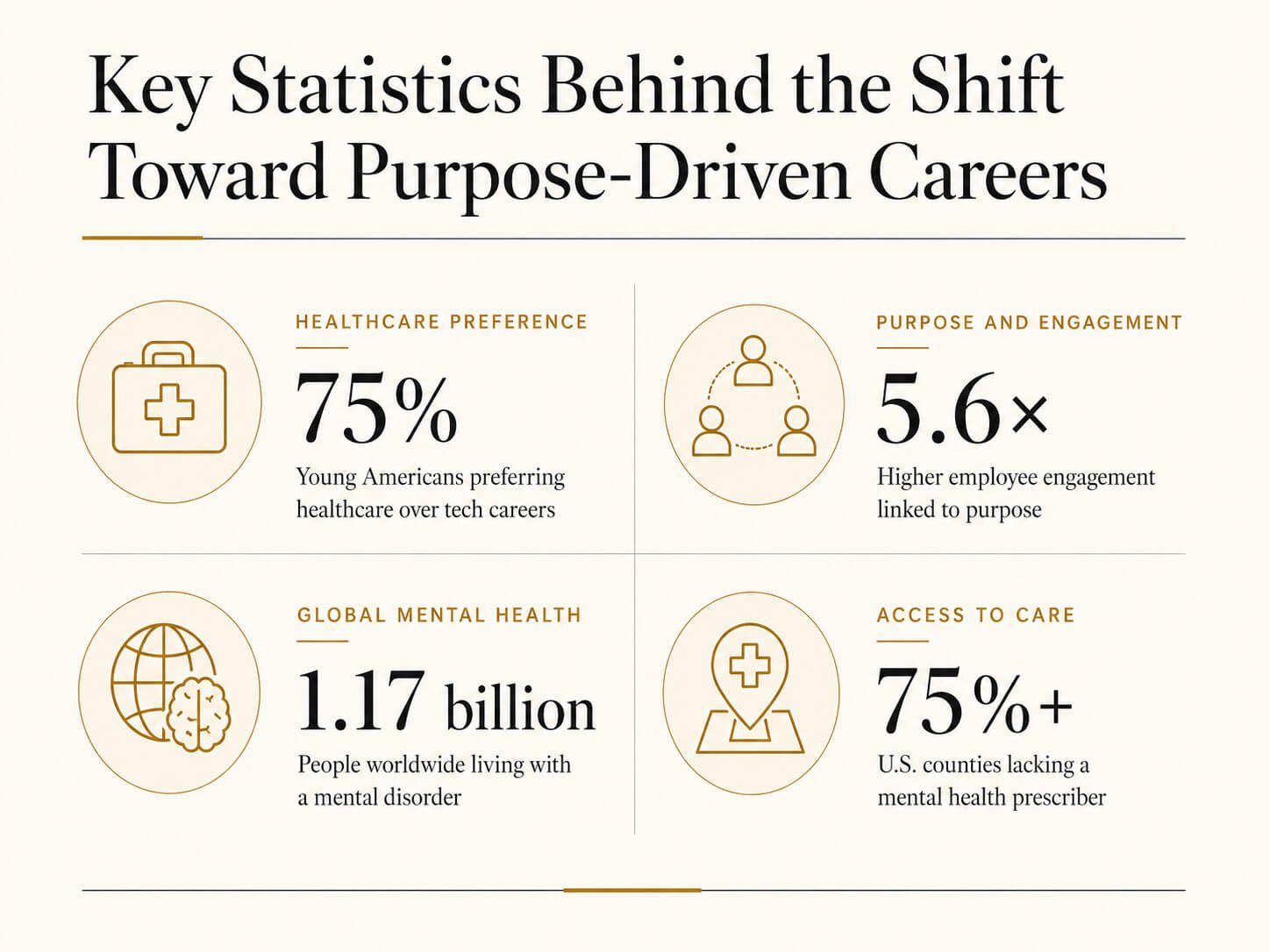
According to Gallup, employees who experience a strong sense of purpose at work tend to be significantly more engaged. In fact, they are 5.6 times more likely to be engaged than employees who lack that sense of purpose. They are also less likely to experience burnout and more likely to remain with their employers.
These findings highlight an important reality. People are often more motivated when they understand how their efforts contribute to a larger mission. Employees are often more invested when they can see the value of their work. This can involve helping customers, supporting communities, improving products, or solving complex problems.
Unfortunately, Gallup also found that relatively few workers consistently experience this level of purpose in their jobs. This gap between what employees want and what they experience may help explain why so many professionals are rethinking their careers.
As discussions around employee wellbeing continue to evolve, purpose is becoming more than a workplace buzzword. It is increasingly recognized as a factor that influences satisfaction, productivity, and long-term career commitment.
ADDITIONAL INSIGHT
Purpose is not only created by the industry someone works in. It is also shaped by management, communication and culture.
Two people can do similar work and have very different experiences. One may feel trusted, valued and connected to the organisation’s mission. The other may feel overworked, ignored or disconnected from the result of their effort.
That is why meaningful work is not just about choosing the right career. It is also about choosing the right employer.
ACTIONABLE TIP
When reviewing a potential employer, look for signs that purpose is actually part of the culture.
Do they explain the impact of the role clearly?
Do employees talk positively about the work?
Do leaders connect everyday tasks to a bigger mission?
Do they support wellbeing, development and progression?
Does the job description feel human, or does it only list demands?
👉 If you want to spot problems before accepting a role, this guide explains the warning signs of a toxic workplace.
Why Purpose Is Drawing Professionals Toward Healthcare
The growing demand for meaningful work is influencing career choices across industries, but healthcare offers one of the clearest examples. According to a Forbes analysis, 75% of young Americans would choose a healthcare career over a technology career. The finding suggests that many workers are increasingly prioritizing impact alongside compensation.
Part of healthcare's appeal lies in its ability to address pressing societal needs. Mental health is a notable example. A recent Psychology Today analysis reported that over one billion people worldwide are living with a mental disorder, highlighting the scale of the challenge.
At the same time, workforce shortages continue to affect access to care. As Rachel M. Werner, MD, PhD, noted, more than 75% of U.S. counties lack a mental health prescriber. In many areas, patients may wait weeks or even months to receive treatment. These gaps create opportunities for purpose-driven professionals to contribute in meaningful ways.
For example, some nurses pursue a Doctor of Nursing Practice (DNP) in Psychiatric Mental Health, or a psych DNP program. These programs prepare nurses to assess, diagnose, and treat mental health conditions while providing advanced psychiatric care. They also help nurses develop specialized expertise and expand access to mental health services.
According to Baylor University, many programs now offer flexible online learning options. This allows working professionals to continue their careers while advancing their education.
👉 If you are considering a change of direction, this guide explains how to access the hidden job market and find roles before everyone else.
Helping Professions Continue to Attract Talent
Healthcare is part of a broader trend. Many helping professions continue to attract individuals who are motivated by the opportunity to make a difference.
Social work provides a strong example. The profession does not typically offer the earning potential associated with industries such as finance or technology.
However, it still remains an attractive career path because of its direct impact on people and communities. Fortune's analysis of social worker careers highlights continued demand for professionals working in healthcare, schools, mental health settings, and community organizations.
The continued appeal of social work suggests that many professionals are evaluating careers through a wider lens than compensation alone. They want opportunities to support others, address important challenges, and contribute to meaningful outcomes.
This perspective is becoming increasingly common as workers seek careers that align with both personal values and professional ambitions. The ability to create positive change can be a powerful source of satisfaction, particularly in fields where the results of one's work are visible and tangible.
ACTIONABLE TIP
Before pursuing a helping profession, ask:
What does a normal week in this role actually look like?
What are the emotional demands of the work?
What training or qualifications will I need?
What progression routes exist?
How do people in this field protect their own wellbeing?
Would I still want this role after seeing the difficult parts?
FAQs
How to find a purposeful career?
Finding a purposeful career starts with identifying the causes, problems, or communities that matter most to you. Consider roles that align with your values and strengths. Researching industries, volunteering, and speaking with professionals can help clarify which paths feel meaningful.
Why do people choose healthcare as a career?
Many people choose healthcare because it offers opportunities to improve lives while building a stable career. The field combines technical knowledge with human connection and service. Healthcare professionals often find purpose in helping patients overcome challenges and achieve better outcomes.
What is the main role of a social worker?
The main role of a social worker is to help individuals, families, and communities overcome social, emotional, and practical challenges. They connect people with resources and support services. Social workers also advocate for vulnerable populations and promote overall well-being.
A Shift Towards Purpose-Driven Careers
A Broader View of Success
The growing focus on purpose does not signal the end of traditional career ambitions. Most professionals still want competitive pay, advancement opportunities, and long-term stability. What is changing is the way these goals are being balanced against other priorities.
Research from multiple sources points to the same conclusion. Workers increasingly want careers that offer both personal success and meaningful contribution. Many younger workers want careers that provide a sense of purpose. Professionals are also increasingly drawn to roles where the results of their work are visible and meaningful.
As this trend continues, career success may be defined less by titles and paychecks and more by the value professionals create. For many workers, the most rewarding careers combine growth, stability, and meaningful impact.
ADDITIONAL CLOSING INSIGHT
The important point is that professional success is becoming more personal. For some people, success will still mean earning more, gaining status or moving into leadership. For others, it will mean doing work that feels useful, balanced and aligned with their values.
Neither version is wrong. The strongest career decisions come from being honest about what matters to you, then choosing work that supports both your ambitions and your wellbeing.