
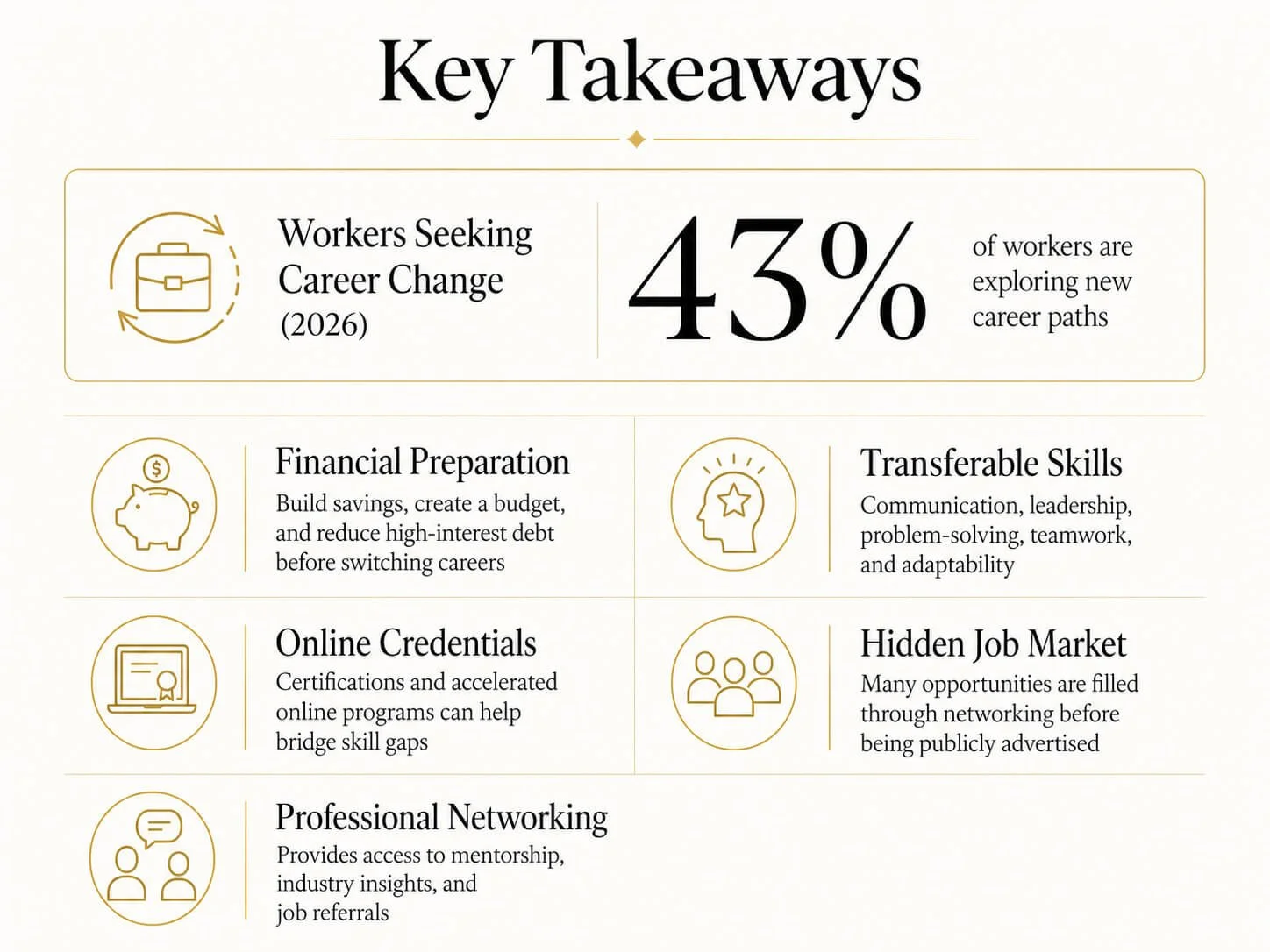
Changing careers can feel like stepping into unfamiliar territory, but it can also be one of the most rewarding decisions you make. According to Yahoo Finance, about 43% of workers are seeking to change career paths in 2026. This trend highlights a growing focus on job flexibility rather than sticking with one employer for the long haul. People are clearly ready to embrace new opportunities, even if it means venturing into a different industry altogether.
Whether you are looking for greater job satisfaction or better growth opportunities, it offers the chance to redefine your professional path. While the process may seem overwhelming at first, approaching it with a clear plan and realistic expectations can make the journey much smoother.
The good news is that you do not have to start from scratch. With the right strategies, your move to a new career can feel less stressful and far more achievable. This article is all about sharing tips to help you transition into a new career with ease.
QUICK ANSWER
To make a career transition feel easier, start by planning the move before you make it. A successful career change usually depends on financial preparation, transferable skills, the right credentials, a stronger network and a clear understanding of the role or industry you want to enter.
To transition careers with more confidence:
Build a financial cushion before making the move
Identify the transferable skills you already have
Research the qualifications or credentials employers expect
Use online courses or flexible study to close skill gaps
Speak to people already working in your target industry
Update your CV and LinkedIn profile for the new direction
Build your network before you start applying heavily
Take small steps first, such as volunteering, freelance work, shadowing or short projects
Avoid quitting impulsively without a practical plan
👉 If you want a simple way to check whether your CV is doing this properly, this guide explains what skills to include in your CV.
Be Financially Prepared
A successful career transition is not just about learning new skills or finding the right opportunity. It is also about making sure you are financially prepared for the change. Depending on your situation, you may experience a temporary reduction in income, spend money on training programs, or face a longer-than-expected job search.
Vicki Salemi, a career expert for Monster.com, says, “If you’re in a toxic work environment, you might be tempted to say, ‘I’m done, I’m leaving today.’” But from a personal finance standpoint, it’s not beneficial to be spontaneous about a career change.
It means there is a serious risk to your finances when you bet on yourself, as highlighted in an article by CNBC. In such a situation, having a financial cushion can reduce stress. It gives you the flexibility to make thoughtful decisions instead of rushing into a role that may not be the right fit.
Before making the move, review your expenses, savings, and financial commitments. Creating a budget and setting aside emergency funds can help you manage unexpected challenges during the transition. When you feel financially secure, you can focus more on building your new career path with confidence and less worry about short-term financial pressures.
ACTIONABLE TIP
Create a transition budget before making any major decisions.
Include:
Essential monthly costs
Training or course fees
Possible income drop
Emergency savings
Travel or commuting costs
Time needed to find a new role
If the numbers feel tight, consider a staged transition. You could study alongside your current role, move into a related position first, or build experience through part-time projects before making a full switch.
👉 If you want to make your career change feel more structured, the Career Development Plan Template helps you review your goals, identify skill gaps and map out your next move with more confidence.
List Your Transferable Skills
When switching careers, one of the most common pitfalls people encounter is the belief that they need to start from scratch. The truth is, you already have a treasure trove of skills that you use across various industries and roles. Taking the time to pinpoint your transferable skills enables you to understand the unique strengths you bring to a new job.
According to Indeed, transferable skills are abilities used across a variety of industries and positions. Whether switching careers or looking for a new role, highlighting these skills can help connect your past experiences with future possibilities. Employers in practically every industry value abilities including communication, organization, relationship-building, and attention to detail.
You can begin by reviewing your previous roles and accomplishments. Think about the tasks you handled successfully and the abilities that helped you achieve results. It can reveal strong connections between your experience and future goals and help employers see the value you offer from day one.
ADDITIONAL INSIGHT
Transferable skills are often the bridge between your old career and your next one. The key is to translate them into the language of your target industry.
For example, if you have managed customers, you may also have experience in communication, problem solving, relationship management and conflict resolution. If you have trained colleagues, you may have skills in coaching, leadership and explaining complex information.
ACTIONABLE TIP
For each transferable skill, write one proof point.
Instead of saying:
Strong communication skills
Try:
The ability to explain complex ideas and information to non technical customers and internal teams.
This makes your skills easier for employers to relate and understand.
👉 If you are unsure how to present your existing experience in a new direction, this guide explains what skills to include in your CV, including transferable skills, soft skills and role-specific strengths.
Get The Right Credentials Online
Obtaining the right credentials smooths out your career shift and helps you feel more confident as you venture into a new field. Online learning has made it easier to gain industry-relevant knowledge without putting your current responsibilities on hold. Whether you need a certification or a deeper understanding of a subject, online courses can help you bridge skill gaps and demonstrate your commitment to potential employers.
Before you sign up for a program, find out which credentials are highly regarded in the industry you aim for. Focus on programs that offer practical knowledge and recognized qualifications that employers value. For example, if you are transitioning into healthcare through a nursing role, an accelerated BSN online program can help you gain the skills to get started. With accelerated programs, you can wrap up your coursework in less time.
According to Elmhurst University, enrolling in an online Bachelor of Nursing program is your quickest path to a rewarding career. You can find a supportive environment that prioritizes intellectual growth and integrity. As you complete your training, apply what you learn through projects, volunteer work, or freelance opportunities whenever possible. This combination of education and hands-on experience can make your transition into a new career path more successful.
ACTIONABLE TIP
Before paying for a course, review at least 10 job adverts in your target field.
Look for:
Required qualifications
Preferred certifications
Software or technical skills
Experience levels
Repeated keywords
Common responsibilities
If the same qualification appears repeatedly, it may be worth pursuing. If it rarely appears, look for a more practical route into the field.
👉 Before investing in training or qualifications, this guide explains how to find a career that offers both stability and growth, so you can weigh up long-term demand, progression and practical rewards.
Build Your Professional Network
Building a strong professional network can ease your career transition and open doors to opportunities. Forbes notes that if you want to climb the career ladder, establishing a robust network is key. In today’s challenging job market, networking can make all the difference. It might feel a bit daunting at first, but if you approach it with confidence, it can lead to amazing opportunities and help you land your next job.
A well-developed network gives you access to industry insights, career advice, mentorship, and potential job leads. As you explore a new career path, connecting with professionals who already work in the field can help you identify the skills employers value most. These relationships can also provide encouragement and guidance throughout your transition journey.
Focus on creating genuine relationships by showing interest in others' experiences and offering value whenever possible. Consistently nurturing these connections can strengthen your professional presence and increase your visibility. Over time, your network can become one of the most valuable resources in helping you successfully navigate a career change.
ADDITIONAL INSIGHT
Networking is especially important during a career transition because you are asking employers to see your potential, not just your past job titles.
The right conversations can help you understand what employers really value, which skills matter most and where entry points exist. Networking can also reveal roles that are not yet widely advertised.
ACTIONABLE TIP
Start with five simple messages.
Contact:
One former colleague
One person already in your target industry
One recruiter who works in that sector
One course provider or professional body
One company you admire
Ask for insight, not a job. A simple message asking how someone entered the field or what skills matter most can be enough to start a useful conversation.
👉 If you want to uncover opportunities before they are publicly advertised, this tool gives you access to the hidden job market.
Frequently Asked Questions
Why can a career switch be hard?
A career switch can be challenging because it often involves learning new skills, adapting to a different industry, and stepping outside your comfort zone. You may face uncertainty, competition, or temporary financial adjustments. Building credibility in a new field takes time, but careful planning and persistence can make the transition smoother.
What is the best age for a career change?
There is no perfect age for a career change. The best time is when your goals, interests, or circumstances point you toward a new direction. People successfully switch careers in their twenties, forties, fifties, and beyond. With planning, continuous learning, and determination, a career change can be rewarding at any age.
How to find the right career for yourself?
Finding the right career starts with understanding your interests, strengths, values, and long-term goals. You must explore different industries, research roles that match your skills, and talk with professionals in those fields. Gaining hands-on experience through courses, volunteering, or internships can also help you discover a career that feels fulfilling.
How long does a career transition usually take?
A career transition can take a few months or much longer, depending on the industry, qualifications required and how much experience you already have. A move into a related field may happen quickly, while a regulated profession or specialist role may require additional study, training or supervised experience.
Should I change career if I feel unhappy at work?
Not always. Sometimes the problem is the employer, manager, workload or culture rather than the career itself. Before changing direction completely, consider whether a different company, role or working environment could solve the issue. If the same dissatisfaction appears across several roles, a career change may be worth exploring.
How do I explain a career change to employers?
Explain the link between your past experience and your future direction. Focus on transferable skills, relevant achievements, new training and why the move makes sense. Employers are more likely to take your transition seriously when your story feels clear, positive and practical.
Key Statistics on Career Future-Proofing
Final Thoughts
A career shift is a pivotal decision that can positively influence your professional future. While the journey may feel uncertain at times, it also brings new learning, growth, and opportunities. Staying patient with yourself and remaining open to change enables you to move forward with greater clarity. Each step you take builds momentum toward a more aligned and satisfying career path. Trust the process, stay consistent, and allow your efforts to guide you toward long-term success.
A career transition becomes less overwhelming when you treat it as a project rather than a leap. You do not need to solve everything at once. You need to understand your direction, protect your finances, build the right skills and create opportunities to test the new path.
Small, consistent steps can turn an uncertain career change into a realistic move towards work that fits you better.
👉 If you are ready to update your applications for a new direction, browse our CV templates and job search tools to create a clearer, more focused application for your next career move.