
A professional comfort zone can be useful. It gives you stability, confidence and a sense of control. Familiar work can help you perform well, manage your workload and build a steady routine. The problem starts when comfort becomes the reason you stay.
A role that once felt secure can begin to feel restrictive. You may stop learning, avoid new responsibilities or talk yourself out of applying for roles that would stretch you. At first, this can feel sensible. Over time, it can limit your career growth.
The Hill published an article in 2025 that cited a survey showing that 60% of workers had stayed in roles longer than they wanted because changing career felt difficult. Although 66% believed switching would make them happier, only 13% actually made the move.
Career change can feel daunting, especially when money, confidence and uncertainty are involved. Keith Spencer, a career expert at Resume Now, put it clearly: “Career changes can feel daunting, especially when financial concerns and uncertainty come into play.”
That does not mean you need to resign tomorrow or make a dramatic leap. Often, the better approach is to take smaller, safer steps that help you understand what you want next.
QUICK ANSWER
Your comfort zone may be limiting your career if you feel safe in your role but no longer feel challenged, interested or aligned with your long-term goals.
You may need to make a change if:
Your responsibilities have become repetitive
You rarely learn anything new
You keep delaying a move you know you want to make
You avoid opportunities because they feel uncomfortable
You feel capable of more, but unsure where to start
You stay because change feels risky, not because the role still suits you
The safest way to move forward is to test small changes first. Build skills, speak to people in your target field, take on a new project, volunteer, study part-time or explore roles before committing to a major move.
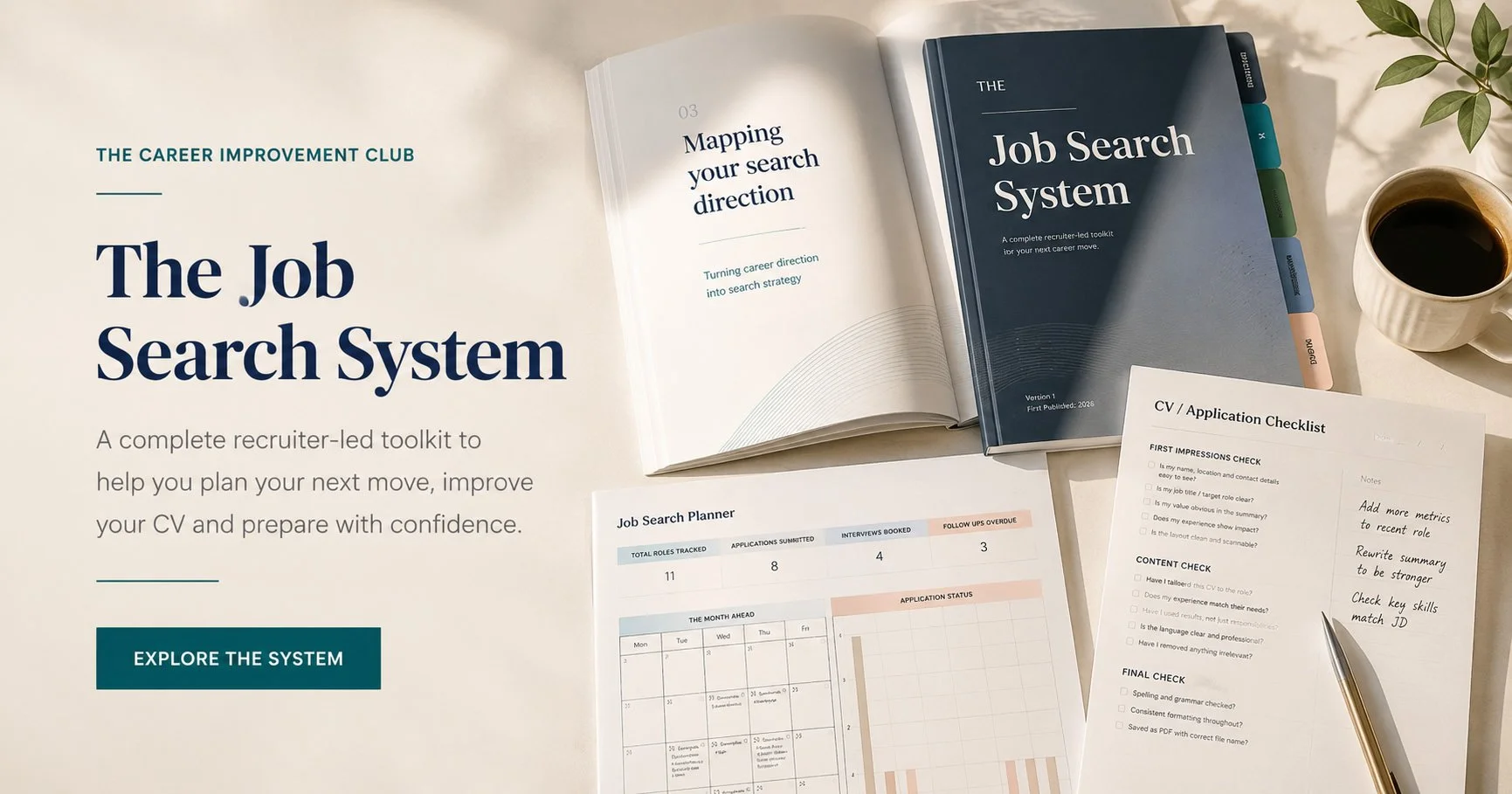
Stepping outside your comfor zone may involve changing jobs, in this case the job search system will help you plan the process from day 1 of your job search to day 1 of your new job.
WHAT’S INCLUDED
In this guide, we’ll cover:
How to recognise when comfort is holding you back
How to identify the skills you need for your next role
Why small career risks are often better than sudden leaps
How to build a career growth plan that keeps you moving
Practical ways to step outside your comfort zone without putting everything at risk
Recognise when familiarity is holding you back
A Psychology Today feature explains how your comfort zone can be a barrier, particularly when fear stops you from pursuing goals that matter to you.
Being comfortable at work is not automatically a problem. Genuine job satisfaction can come from a role that suits your strengths, values and lifestyle. The issue is different. It starts when you stay mainly because change feels difficult.
Your role may still be familiar, but familiarity is not the same as fulfilment. If your job no longer supports your goals, gives you room to grow or helps you build useful skills, your comfort zone may be disguising stagnation.
Watch for signs such as:
Your work feels repetitive
You rarely feel stretched
You have stopped feeling curious
You avoid applying for better roles
You assume you are not ready, even when you have relevant experience
You receive little useful feedback
You feel relieved by routine, but frustrated by lack of progress
Ask yourself one question:
Am I staying because this role genuinely suits me, or because the alternative feels uncertain?
👉 If you are unsure whether the issue is your role, employer or wider career path, this guide explains when to search for a new job.
ACTIONABLE TIP
Score your current role out of 10 across these five areas:
Learning
Motivation
Progression
Confidence
Long-term fit
If several scores are low, your comfort zone may be protecting you from short-term discomfort while costing you long-term growth.
Identify the skills you need for your next role
Before pursuing a new role or career direction, look carefully at what you already bring to the table.
Review your technical skills, communication style, work habits, achievements and experience. Think about the tasks people trust you with. Look at the problems you solve regularly. Notice the feedback you receive from colleagues, managers or clients.
This helps you see the skills you already have, rather than assuming you need to start again.
Some people also have personal traits that point towards a different career direction. For example, someone who is empathetic, patient and interested in supporting others may be drawn towards social work. An HR professional with an existing degree could explore a career switch by studying for a master’s in social work. MSW programs online are available for people who want to retrain without giving up their current job.
Tulane University, for example, offers an online MSW programme that is open to graduates from any field. This kind of route can help close the gap between your current experience and the work you want to move towards.
You can also build new skills without immediately changing employer. Workplace projects are useful because they let you test new responsibilities in a lower-risk way. You might volunteer to coordinate a process, present findings, support a cross-functional team or take ownership of a small improvement project.
These experiences can strengthen your CV and help you work out whether you actually enjoy the work linked to your next step.
👉 If you are reviewing your experience, this guide explains what skills to include in your CV, including transferable skills, soft skills and role-specific strengths.
ACTIONABLE TIP
Create three lists:
Skills I already use well
Skills I enjoy using
Skills I need for the role I want next
The overlap between the first two lists can show you where your natural strengths sit. The third list shows where you may need to develop.
Take small risks before a major move
According to New America, career transition is rarely simple. Workers interviewed for its research described several barriers that made job changes harder, with lack of savings being one of the biggest obstacles.
You do not need to take a major leap without preparation. Smaller professional experiments can help you test your interests, confidence and appetite for change before making a bigger decision.
You could:
Take on a new project at work
Volunteer with a relevant organisation
Join a professional association
Attend an industry event
Take a short course
Try freelance or project-based work
Arrange an informal conversation with someone in the field
Shadow someone, where possibleIf you are considering a helping profession, for example, volunteer experience may help you understand whether you enjoy direct service, emotionally demanding conversations and supporting people through complex situations.
These experiments give you real evidence. That evidence is usually more useful than guessing from the outside.
No experiment has to become a permanent commitment. The point is to learn before you leap.
👉 If you are thinking about a bigger move, this guide shares practical tips for a smoother career transition.
ACTIONABLE TIP
Choose one low-risk career experiment for the next 30 days. For example:
Speak to one person in a role you are curious about
Research one qualification
Volunteer once
Update your CV for a possible next step
Apply for one role that stretches you
Take one short online course
Small action reduces fear because it replaces uncertainty with information.
Build a career growth plan that keeps you moving.
A Gallup feature says career development works best when your strengths and talents are aligned with your work. It also notes that people who use their strengths are six times more likely to be engaged in their jobs and three times more likely to report an excellent quality of life.
Career growth becomes easier when you turn vague intentions into specific goals.
Instead of saying, “I need a change,” try to define what kind of change you want.
Do you want more responsibility?
A better manager?
More meaningful work?
Higher pay?
A new sector?
More flexibility?
A clearer progression path?
Once you know what is missing, you can make a better plan.
Review that plan regularly. A monthly or quarterly check-in can help you track progress, spot obstacles and adjust your direction. Your interests may change as you learn more. Your personal situation may affect the speed of your move. That is normal.
Before making a major move, think about your finances, responsibilities, qualifications, support network and the time needed to transition properly.
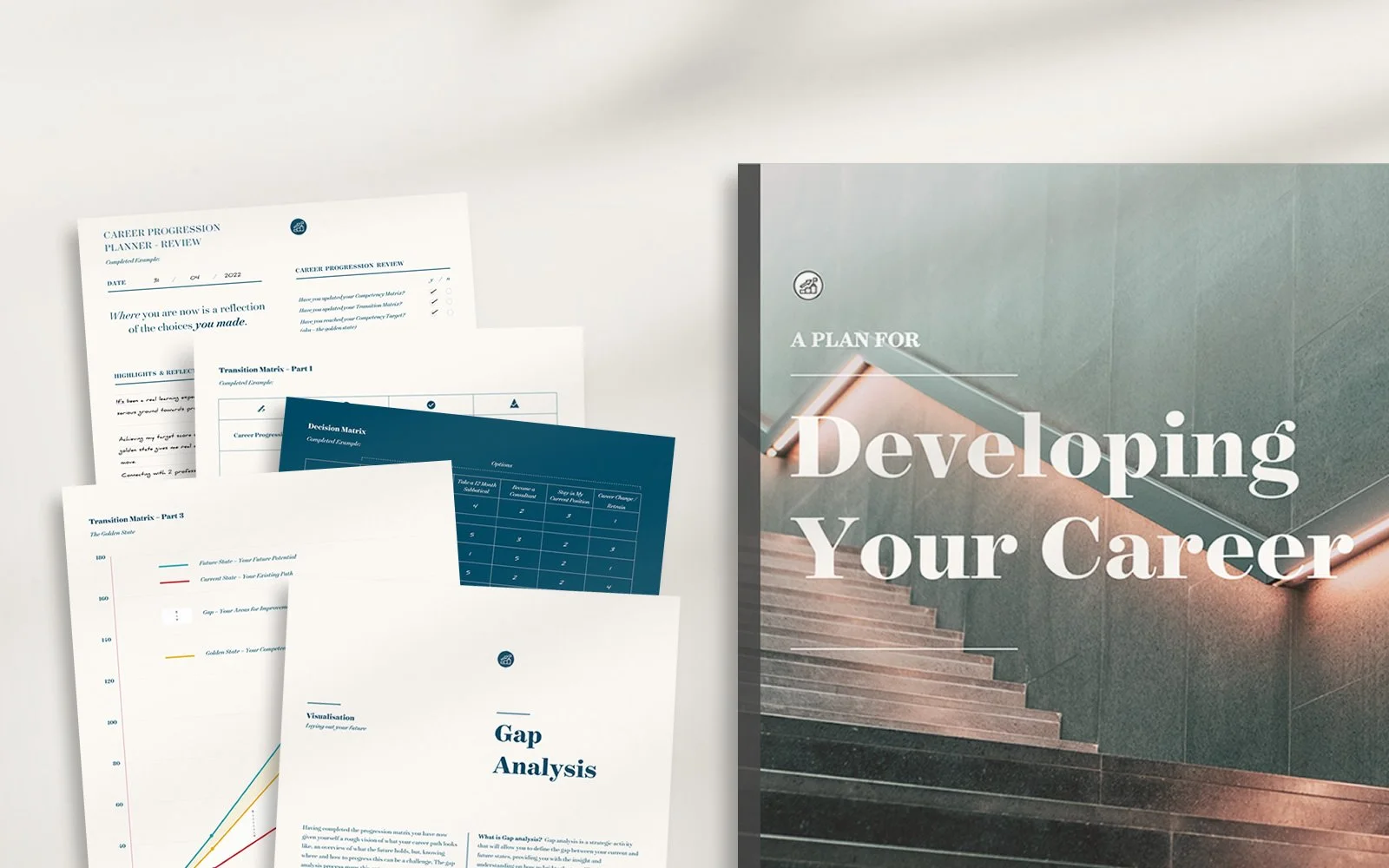
👉 If you want a structured way to work through your next move, the Career Development Plan Template helps you review your goals, identify skill gaps and build a clearer plan.
ACTIONABLE TIP
Set one short-term goal for the next month.
Examples:
Update my CV
Book one conversation with someone in my target field
Research three suitable roles
Complete one short course
Ask my manager for a new responsibility
Review my finances before making a move
One clear step is better than months of vague frustration.
A clear career plan makes all the difference.
Frequently Asked Questions
How do I know if I am comfortable or genuinely satisfied at work?
Genuine satisfaction usually includes meaningful work, some challenge, useful learning and alignment with your values. Comfort may be limiting you if you are staying mainly because change feels risky. Ask whether your role still supports your goals, develops your skills and keeps you motivated.
Can I change career without starting again?
Yes. Transferable skills such as communication, organisation, leadership, research, advocacy and problem-solving can apply across many roles and industries. The key is to identify which skills connect to your target career, then close any gaps through study, projects, volunteering, mentoring or practical experience.
What is the safest way to step outside my career comfort zone?
Start with a low-risk experiment. This could be an informal conversation, short course, volunteer role, workplace project or freelance assignment. These steps help you test a new direction while keeping your current income and responsibilities in place.
Should I leave my job if I feel stuck?
Not immediately. Feeling stuck is a signal to investigate, not always a reason to resign. First, work out whether the problem is your role, your employer, your manager, your industry or your lack of progression. Once you understand the cause, you can choose a safer and more effective next step.
Key takeaways
Final Thoughts
A comfort zone can be useful. It can help you perform well, build confidence and understand your strengths. But, it becomes a problem when it stops you growing.
The best way to move forward is not always to make a dramatic leap. Often, it is to take one considered step towards something different. Learn more about the role you want. Build one skill. Speak to one person. Take on one new challenge.
Progress may feel uncertain at first, but action creates clarity. Over time, small decisions can turn hesitation into a more confident career direction.